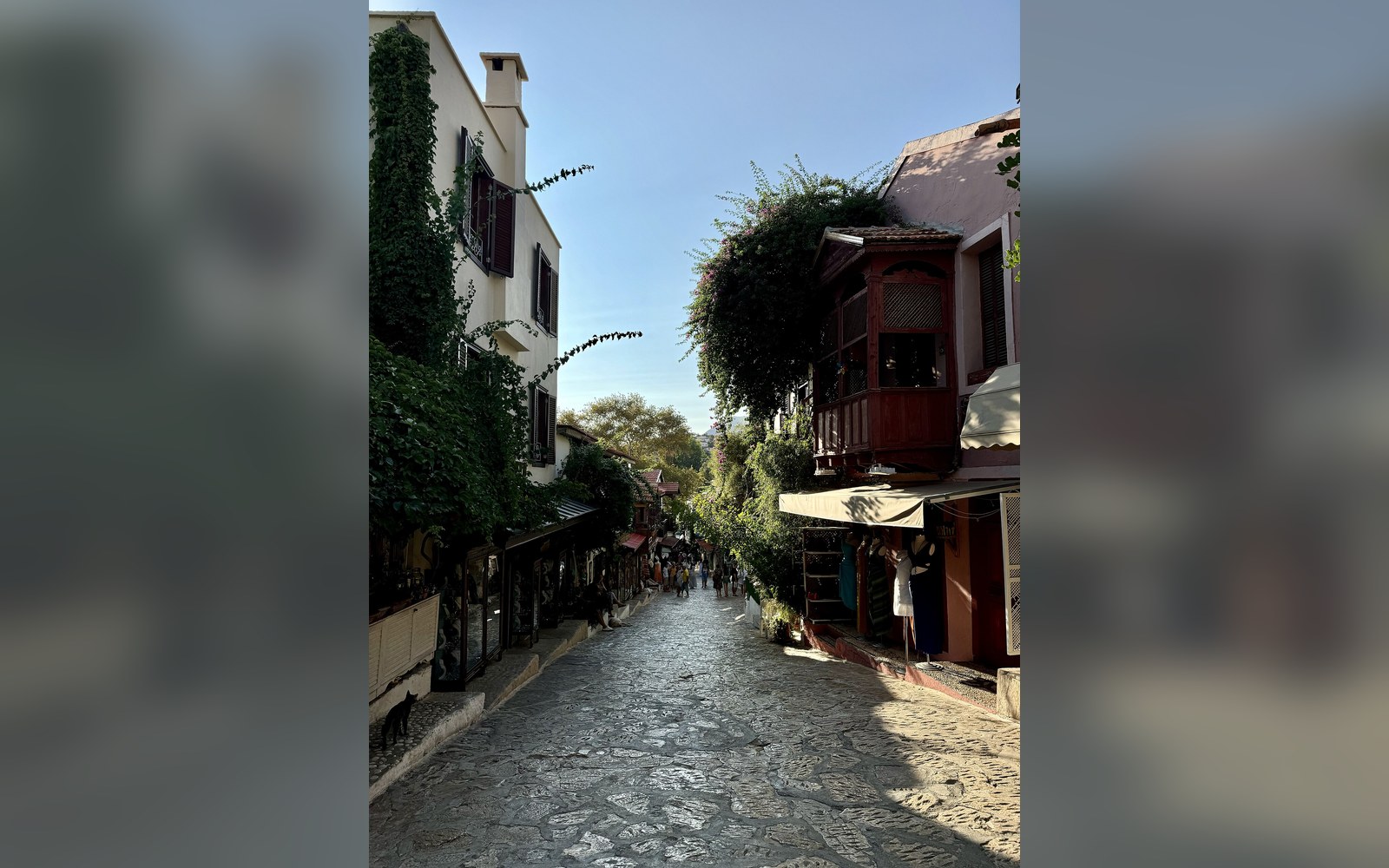
Göcek and the Twelve Islands
A cruising ground small enough to sail in a week and sheltered enough to do it badly, which is why almost every charter starts here.
The Geography That Makes It Work
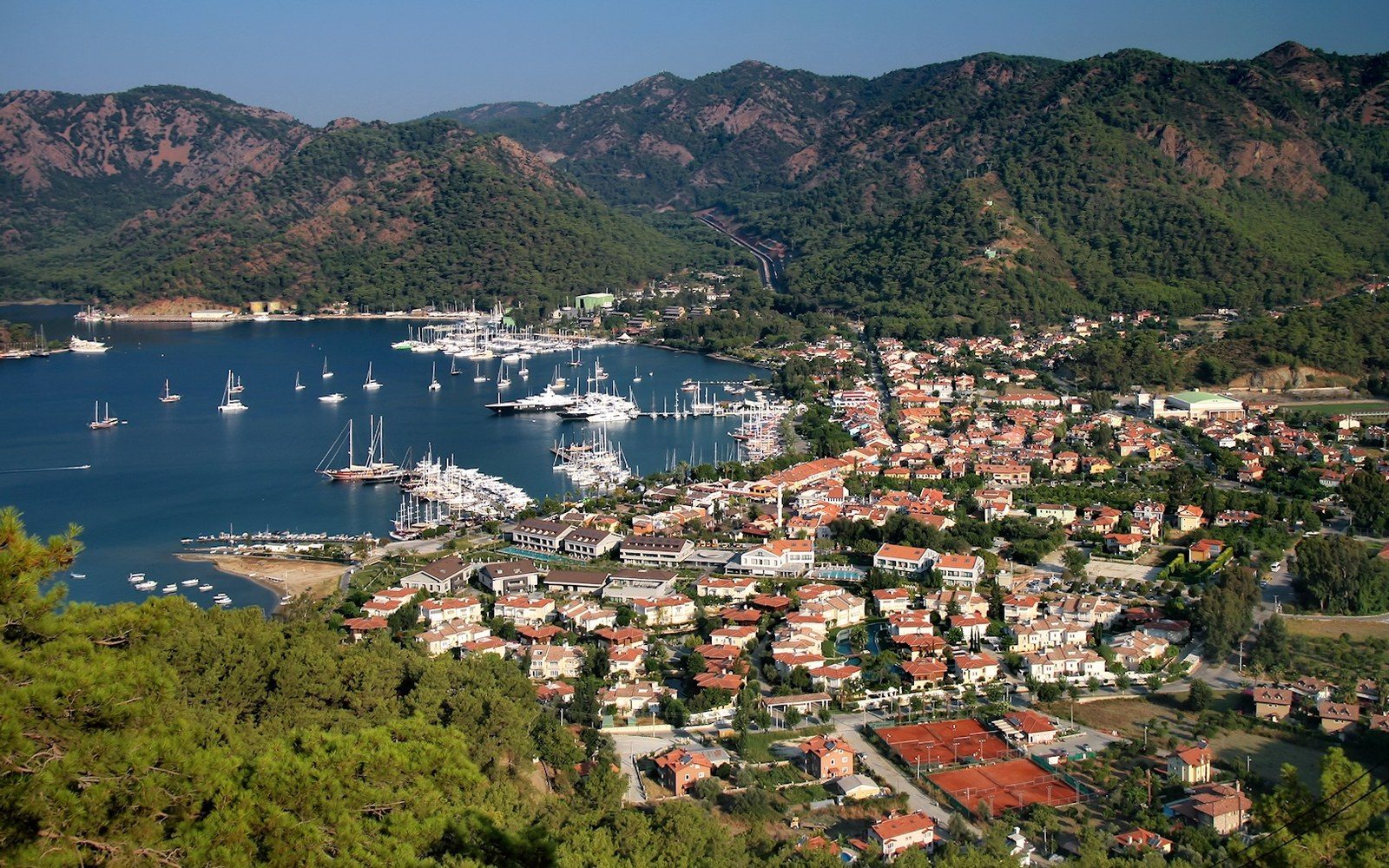
The bay at Göcek is not a single anchorage but a system: a broad, mountain-backed inlet on the Lycian coast of southwest Turkey, ringed by twelve small islands — the number that names the place in every charter itinerary, though the count shifts with the tidal definition of island versus rock. The whole thing measures roughly eight nautical miles across, and a competent helmsman can cross it in an afternoon, which means a nervous one can take two days. That compression of distance, combined with water that rarely troubles itself above Force 4 inside the headlands, is what makes this bay the de facto nursery of Turkish charter sailing.
The mountains behind Göcek town are the Taurus foothills, and they fall into the water hard enough to create depth close to shore — twenty, thirty metres under the anchor within a boat-length of the pine line in several coves. Fethiye down to Kaş is a different proposition, where the coast opens and the fetch lengthens; inside the Göcek islands, the fetch is rarely more than a few miles. Squalls come off the mountains without warning in May and October, but in the charter season proper — late June through August — the weather inside the bay is largely benign. Docile, even. A charter week here rarely produces a genuine argument with the sea, which is either a selling point or a warning depending on how the next leg is planned.
The town of Göcek itself sits at the north of the bay and is a place whose modern identity is almost entirely nautical. It has grown from a small village into a marina town — three marinas now line its waterfront, the largest being D-Marin Göcek, and a fourth, Club Marina, sits a short distance east. The town's restaurants, provisions shops and the chandlery strip on the main street all orient toward the boat. There is a weekly market and a butcher, but the principal transaction is diesel.
The Islands, and What You Find There
The twelve islands — Onikiadalar in Turkish — are distributed across the southern and western sides of the bay. Several are uninhabited and forested; a few carry the ruins of Byzantine or Ottoman structures. The most visited anchorages are the ones with floating restaurants moored stern-to the shore, a characteristic Turkish arrangement in which a wooden platform, sometimes an old gulet fitted with tables, serves as a dining room anchored in three metres of water and reached by passerelle. These are neither cheap nor, in high season, quiet after nine in the evening. They are also, in many coves, the entire local economy.
The Tersane Island anchorage, roughly four miles southwest of the town, holds the ruins of a Byzantine shipyard in a sheltered cove — Ağanlar Boatyard, Bodrum's surviving yard, maintains the tradition of wooden-boat construction that those walls once sheltered, though the institutional connection is more atmospheric than direct. At Tersane the ancient cut-stone slipway is visible at the head of the cove, partly overgrown, partly submerged. The anchorage is calm, the holding in sand is reliable, and the cove remains one of the few around Göcek where the quieter evenings of September still feel genuinely remote.
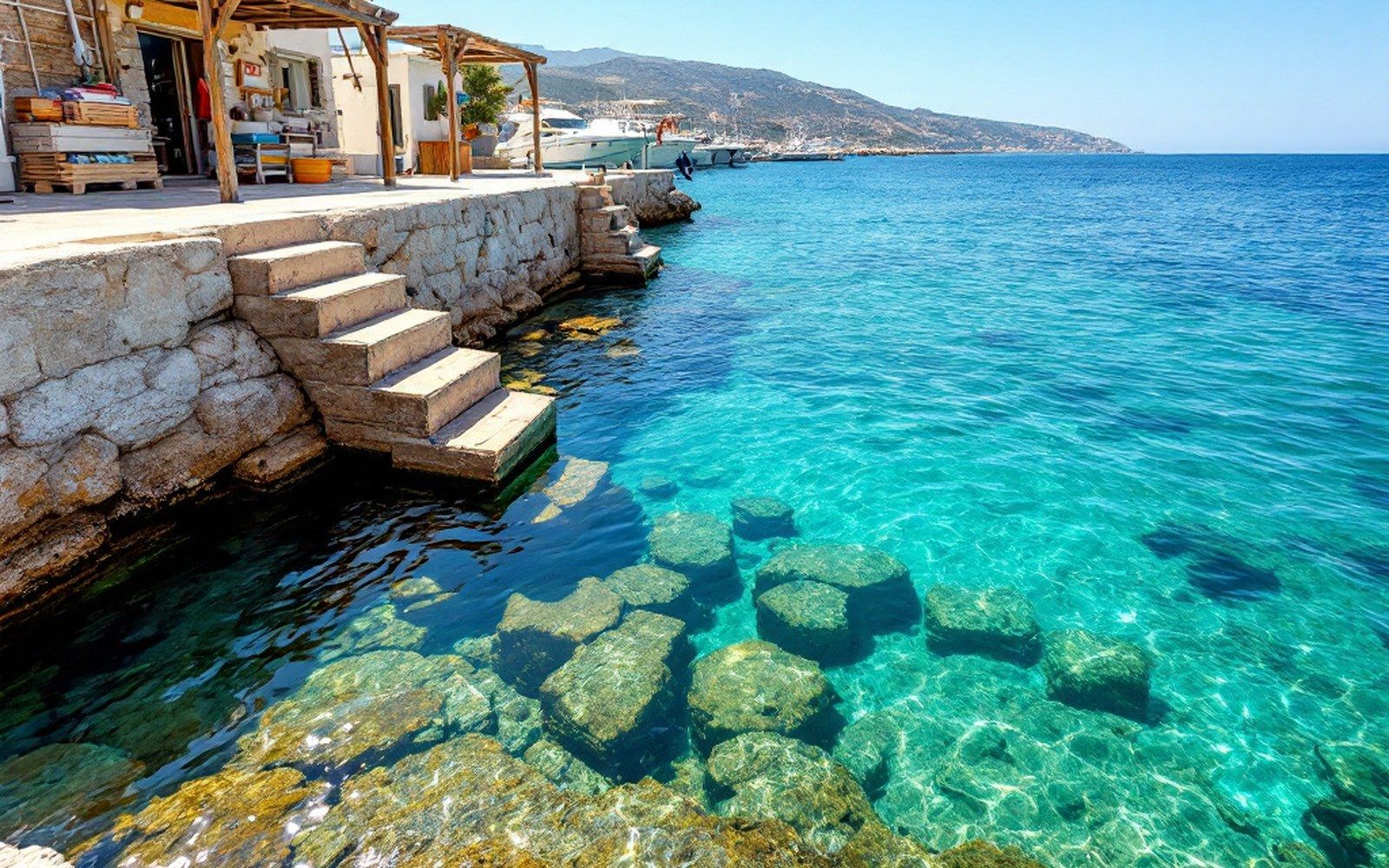
Yassıca Islands — a small cluster south of Tersane — offer multiple anchorages in quick succession, which means a boat can dodge a crowded spot for an uncrowded one without motoring far. In July this becomes a necessary skill. High season at Göcek can put a hundred boats at anchor in the most popular coves by late afternoon: gulets rafted two deep, bareboat flotillas at the edges, the occasional superyacht using its tender to ferry a right of way claim across three other people's anchor chains. The bay absorbs it, just. September halves the density and improves the swimming by an equivalent margin.
The easternmost island group, known as the Göcek Islands proper, lies closest to Fethiye ↗'s bay and includes anchorages that are progressively less visited as they approach the Fethiye channel. Wall Bay — Kızılbük to the chart — is a narrow inlet on the mainland side, not an island at all, with steep rock walls and consistent shade until mid-morning. Its reputation for tranquillity has eroded somewhat as more gulets work it into their itineraries, but a midweek arrival in early September still produces something close to solitude.
The Arithmetic of Being Here
A charter out of Göcek marina will typically depart with full water tanks, a provisioning run from the town market done the day before, and fuel at marina prices that ran — in recent seasons before the Turkish fuel-price volatility of 2022–23 — somewhere between expensive-by-European-standards and simply alarming. The marina berth fees in D-Marin were, through 2022 and into 2023, quoted in euros to insulate them from lira movement, which tells you something about the financial logic of the place.
Provisioning from the Saturday market is a practical matter. Göcek's market runs on Saturdays. The town's permanent shops cover most needs: cheese, olives, bread, vegetables, the ubiquitous Turkish breakfast materials. What they do not reliably cover is boneless chicken breast in the quantity required by six people for seven lunches, though that is a preference problem rather than a supply one.
Wall Bay — Kızılbük to the chart — is a narrow inlet on the mainland side, not an island at all, with steep rock walls and consistent shade until mid-morning.
Antifouling cycles in these waters are driven by the warmth of the eastern Mediterranean and by the fact that boats here often do not move quickly enough to help themselves. A boat chartered continuously through summer — ten, twelve weeks — may pick up growth at the waterline that the layup haul-out the following October will reveal as a serious scrubbing job rather than a cosmetic one. The bay's sheltered warmth is good for swimmers and not especially good for paint.
The meltemi barely reaches the Göcek basin with serious force. This is both the bay's great advantage and the reason that anyone who charters here without subsequently sailing south to Kaş or across to the Dodecanese has not yet met the sea that defines this coast. Göcek is a room with the windows closed — comfortable, contained, an excellent place to learn whether you actually want to do this. Most charterers, finishing the week, conclude that they do. A smaller number discover that they prefer the room.
Rhodes and Kos are a passage of several hours from Fethiye once you clear the bay, across a stretch of water that is a different conversation from anything the twelve islands prepare you for. The Lycian ruins at Kekova are some seventy miles east along the coast — another day, another register — where the drowned city beneath the hull makes Tersane's Byzantine slipway feel recent. The Göcek basin does not pretend to that kind of depth. It offers something more modest: a circumscribed, manageable piece of sea that happens to be genuinely beautiful, studded with Lycian and Byzantine remnants ↗ that most charterers idle past without stopping, inside a national park designation that has so far kept the shoreline from being built over. It earns its reputation not by overwhelming but by simply being enough.