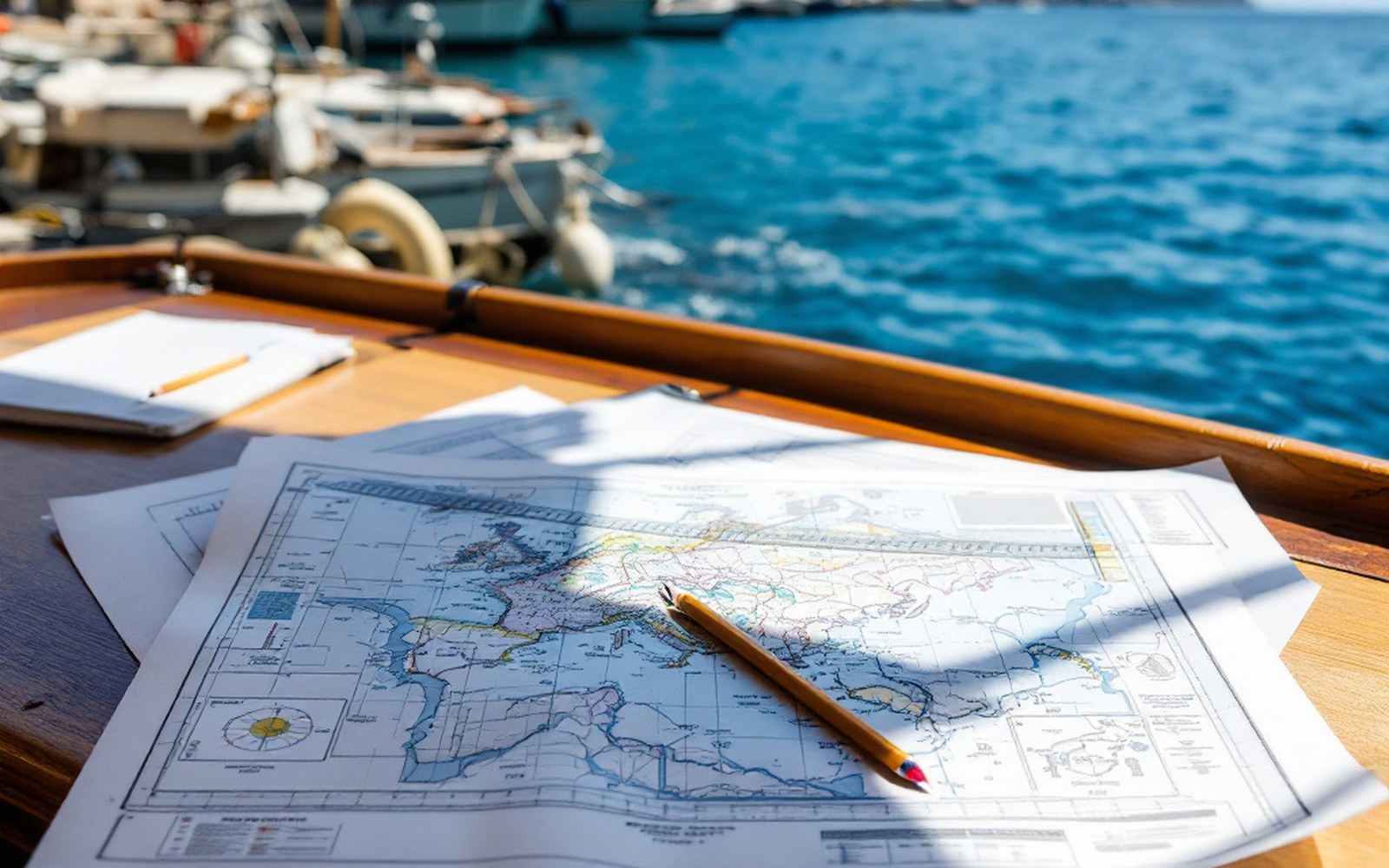
A week aboard, provisioned on a Tuesday
Seven people, seven days, and a shopping run to a market that was open yesterday — the practical reality of feeding a boat before it leaves the dock.
The Tuesday logic
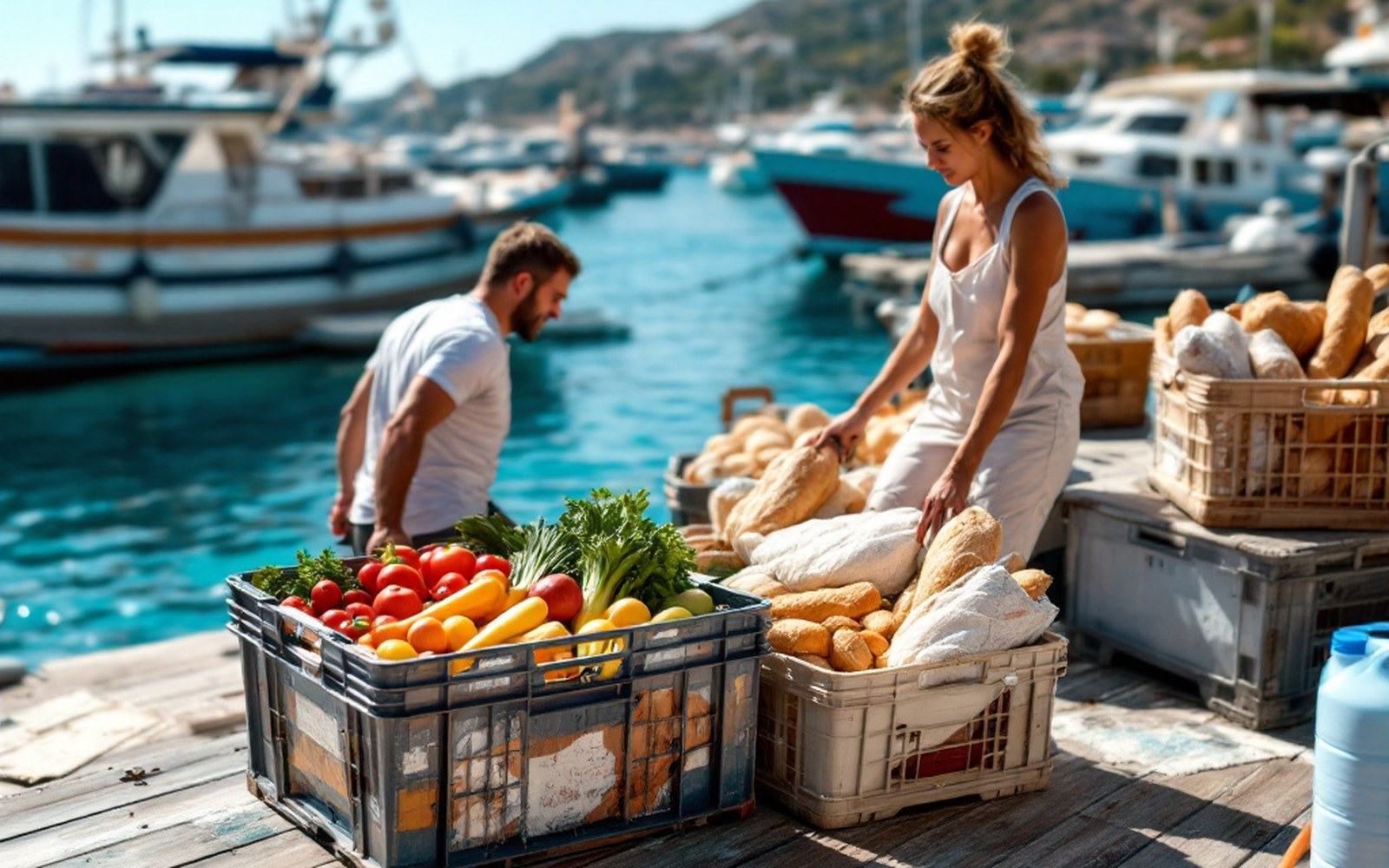
Handover day on the Turkish coast is almost always Saturday. The captain and cook know this; the provisioning market in Göcek or Fethiye ↗ knew it long before any charter agency existed. That leaves Thursday at the earliest — and more commonly Friday morning — for the big shop that fills the hold. So why Tuesday? Because anything that didn't arrive by Tuesday will not be cold, cured, labelled or drunk by the time the lines go out on Saturday afternoon.
The cook plans backwards from the menu, not forward from the dock. A week running from Göcek toward Kekova and the Lycian stonework might anchor in six different spots; only two will have anything resembling a grocery. Kaş has a reasonable supermarket within walking distance of the quay. Kekova ↗, obviously, does not. Every meal the boat cannot buy en route is a meal that left Göcek on Friday.
What actually comes aboard
Dry stores go first because they do not spoil and stowage under berths takes planning — rice, dried pulses, pasta, oil, canned tomatoes, coffee, the Turkish tea that will be brewed on a çaydanlık (the two-chambered kettle found on virtually every gulet galley) from five in the morning onward. Then cleaning supplies, gas cylinders if the cook has checked the lockers and found them short, and water — because the tanks may or may not be full, and a boat with seven aboard burns through fresh water at a rate that surprises everyone on their first passage.
Produce comes later in the week, ideally from one of the weekly market days that rotate through the coast's towns: Fethiye's sprawling Tuesday bazaar is large enough to stock a boat for less than a supermarket charges and with considerably more flavour. Stone fruits, tomatoes that smell like tomatoes, bundles of flat-leaf parsley, ropes of garlic, and the small cucumbers that survive the heat better than the Dutch ones. The cook who skips the bazaar and uses the supermarket instead is paying more for worse ingredients, and the boat eats accordingly.
Meat and fish are bought last and in the smallest quantities the menu permits, because a gulet galley has a refrigerator, not a walk-in cooler. The freezer compartment is small. What actually ends up stowed in a galley that size — versus what seven optimistic guests think they want to eat — is a negotiation the cook wins before the guests arrive.
The bill, and who pays it
Provisioning cost on a crewed gulet is almost always listed separately from the charter fee, quoted as a daily food-and-drink allowance per person. Across the Turkish coast in the early 2020s the figure ran somewhere between €30 and €60 per person per day depending on the standard of the boat and the ambition of the menu; alcohol was frequently on top of that. The cook holds the provisioning money, keeps receipts, and renders an account at the end of the week — a system that functions well when the guests understand it and creates friction when they do not.
What guests rarely see is the labour behind the Tuesday logic. The cook has spent time before the provisioning run mapping the route against the market days and the anchorages, checking what the previous guests left behind, and deciding what can realistically be cooked in a galley moving through a meltemi afternoon. The Turkish coast's provisioning infrastructure — those rotating bazaars, the quayside fish sellers at Kaş, the man in Göcek who reliably has good local honey — is real and functional, but it rewards planning. A cook who improvises entirely on Saturday morning, at a supermarket, feeding people she has never met, is working against herself from the first hour.
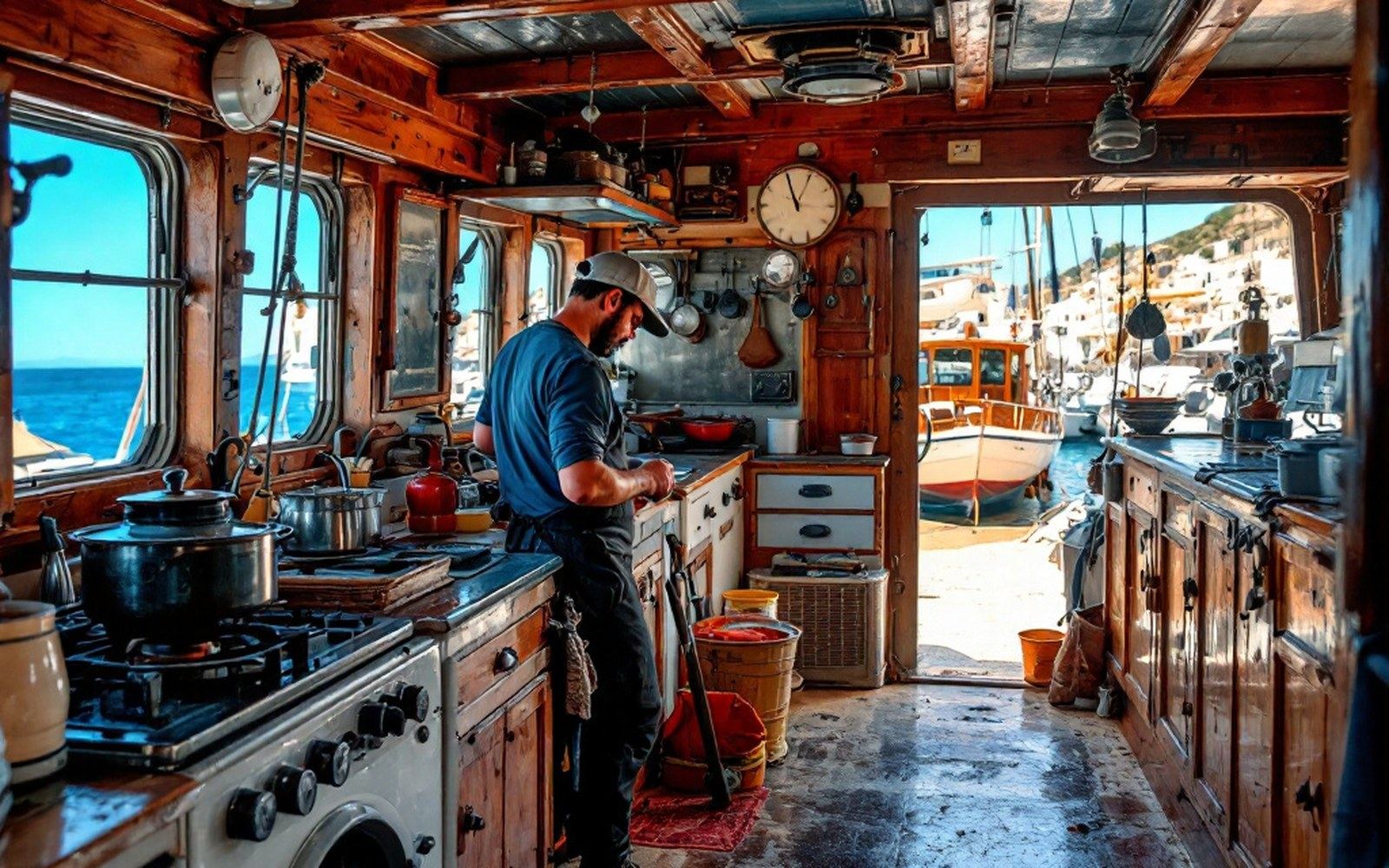
The boat leaves Saturday. The week follows a route shaped partly by wind and partly by what's in the hold. Tuesday's shopping, invisible by then, is the quiet constraint running under all of it.