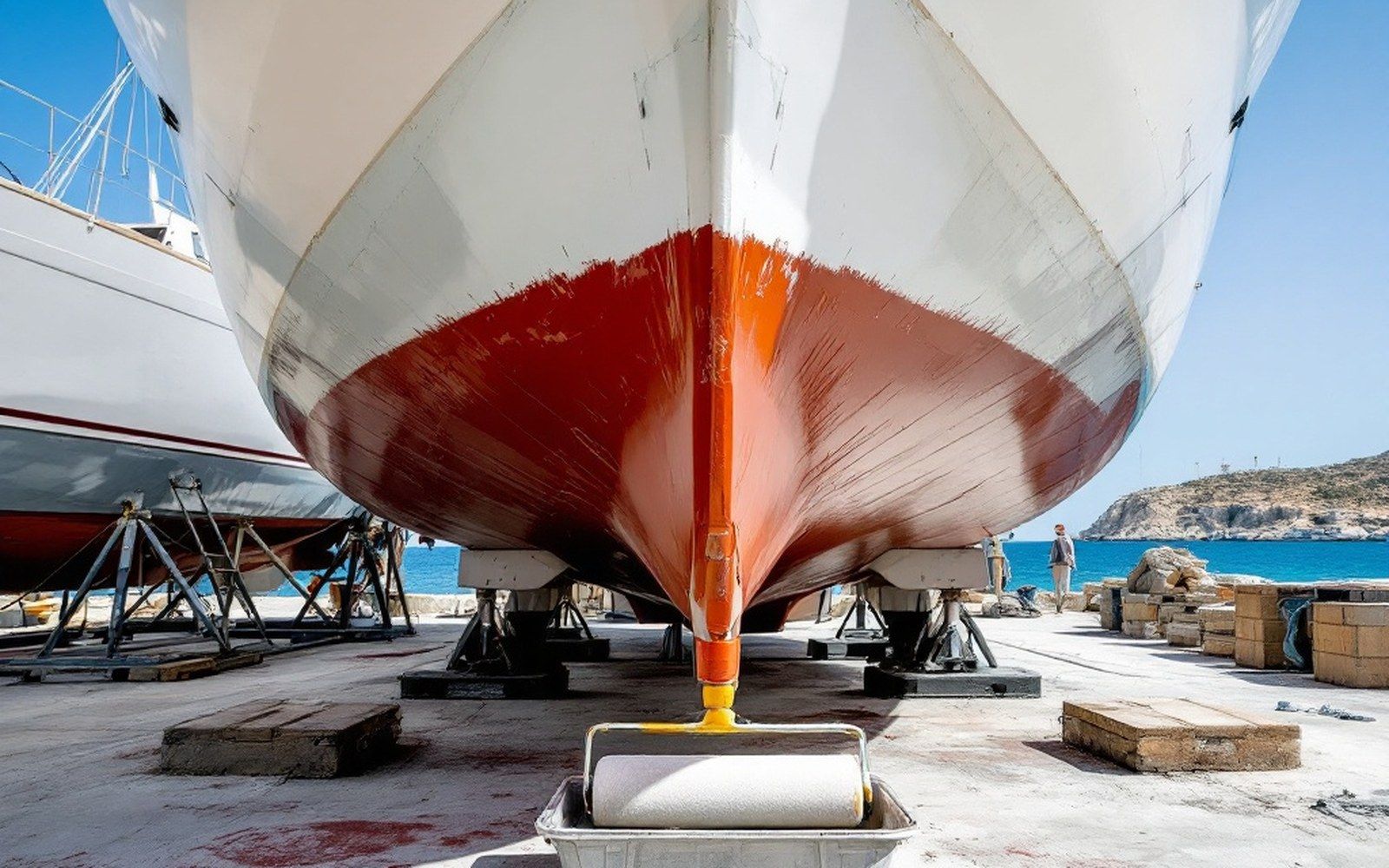
Lift-out, and the fortnight ashore
The travel lift, the pressure wash, the blocks — and the two weeks of work that only happen when a boat is out of the water.
What the yard gets done
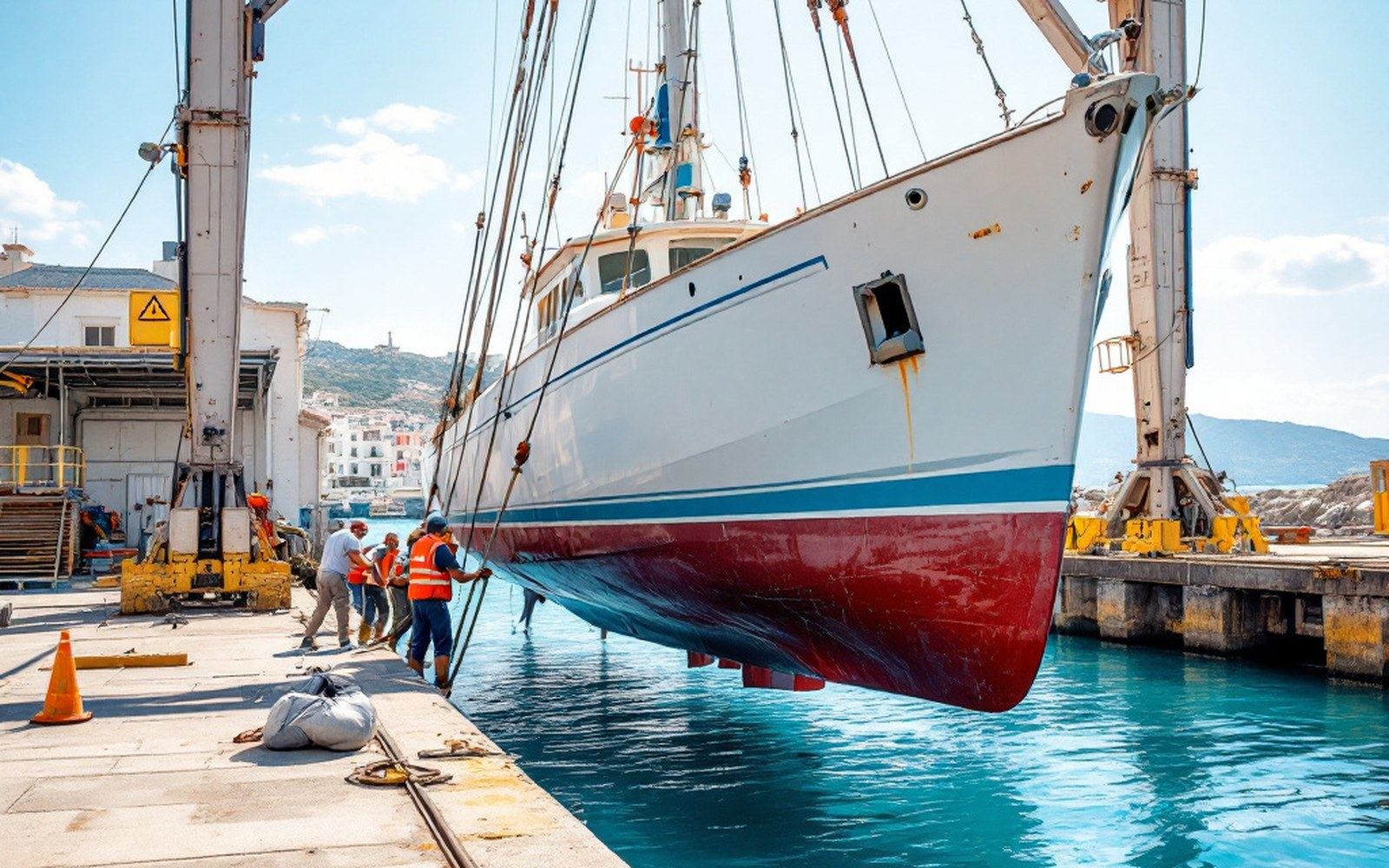
The travel lift ↗ is the event that organises everything. A gulet — a wooden motor-sailer built to the traditional Aegean form — comes out once a year, usually in October or November, before the winter lays up the yards and the insurance lapses. The slings go under the hull, the machine walks the boat clear of the water, and for a few minutes the full extent of the underwater body is visible: the state of the antifouling, whatever growth the season has accumulated, and any damage the owner has not yet mentioned.
The pressure wash follows immediately, while the growth is still soft. A hard scrub at this stage saves days of grinding later. Once the hull is on blocks — keel chocked, bilge shores set — the yard's assessment can begin in earnest. It starts at the waterline and works down, and the findings in the first forty-eight hours usually determine whether the fortnight ashore costs two thousand euros or six.
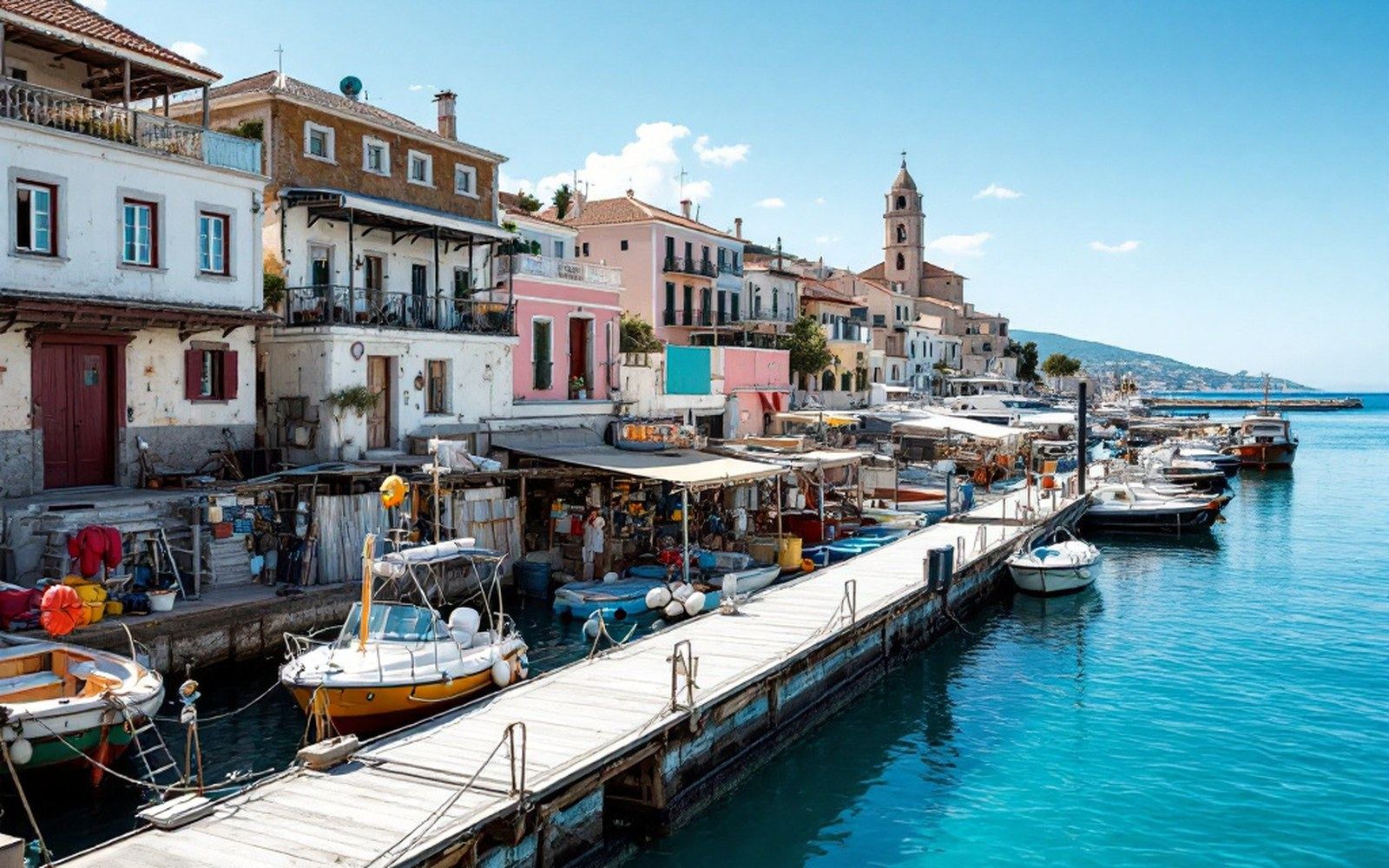
At Ağanlar Boatyard in Bodrum, as at the other surviving yards along the peninsula, the lift-out sequence is well-practised: Bodrum ↗ has been building and maintaining wooden hulls commercially since at least the 1970s, when the Blue Cruise — the gulet holiday on Turkish coastal waters — began to acquire the scale that justified serious yard infrastructure. The sequence has not changed much. The machinery is more powerful; the antifouling paints are different; the rest is the same fortnight it always was.
The work that cannot happen in the water
Several jobs are structurally impossible afloat and have to wait for haulout. Antifouling is the most obvious: the ablative or hard paint that protects a wooden or fibreglass hull from weed and worm cannot be applied underwater, and the timing of haulout is partly set by the paint manufacturer's requirement that the new coat be applied within a certain number of days before relaunch. Get the timing wrong and the fresh paint degrades before the boat is back in the water.
Below the antifouling, the hull planking can be inspected properly only when dry. On a wooden hull — iroko, larch, or a combination — the caulking between planks is examined, the fastenings are tested for corrosion and movement, and any soft spots in the planking itself are opened and repaired. Epoxy fills what it can; a proper rot repair means removing timber. A stern-to mooring arrangement, which is how most gulets lie in harbour throughout the season, puts constant lateral load on the stern fittings, and those fittings come off and get checked every year. The propeller shaft is pulled and inspected; the cutless bearing is measured for wear.
The passerelle — the boarding plank that deploys from the stern — is removed, the stern platform inspected, and the through-hulls below the waterline are tested individually. Each one represents a potential ingress point, and a seized seacock discovered ashore is an inconvenience; the same discovery afloat, in the wrong circumstances, is not.
What it costs, roughly
Costs vary by yard, boat size and what the inspection finds, but the structure of the invoice is consistent. The lift-out charge and daily hard-standing fee are the fixed elements; labour and materials for whatever the survey reveals are variable. For a gulet in the twenty-metre range, the fixed yard costs for a fortnight ashore — lift-in and lift-out included — might run to something in the region of eight hundred to twelve hundred euros at mid-range Bodrum yards as of the early 2020s. Antifouling materials for a hull of that size add several hundred more. Labour is billed by the day at rates that remain lower than northern European equivalents, which is one reason owners based in Greece or Croatia still bring boats to Bodrum for haulout.
The numbers that arrive without warning are the repair numbers. A plank replaced, a shaft bearing recut, a seacock replaced — each is modest individually; collectively they can double the total. The boat that comes out in good condition and goes back in two weeks later with fresh antifouling and clean through-hulls is the cheap version. The winter costs that follow — storage, cover, insurance — are a separate invoice entirely.