Where the week actually goes
A seven-day Blue Cruise covers less ground than the itinerary suggests, and more of that ground than most people expect is covered under engine.
The shape of a week
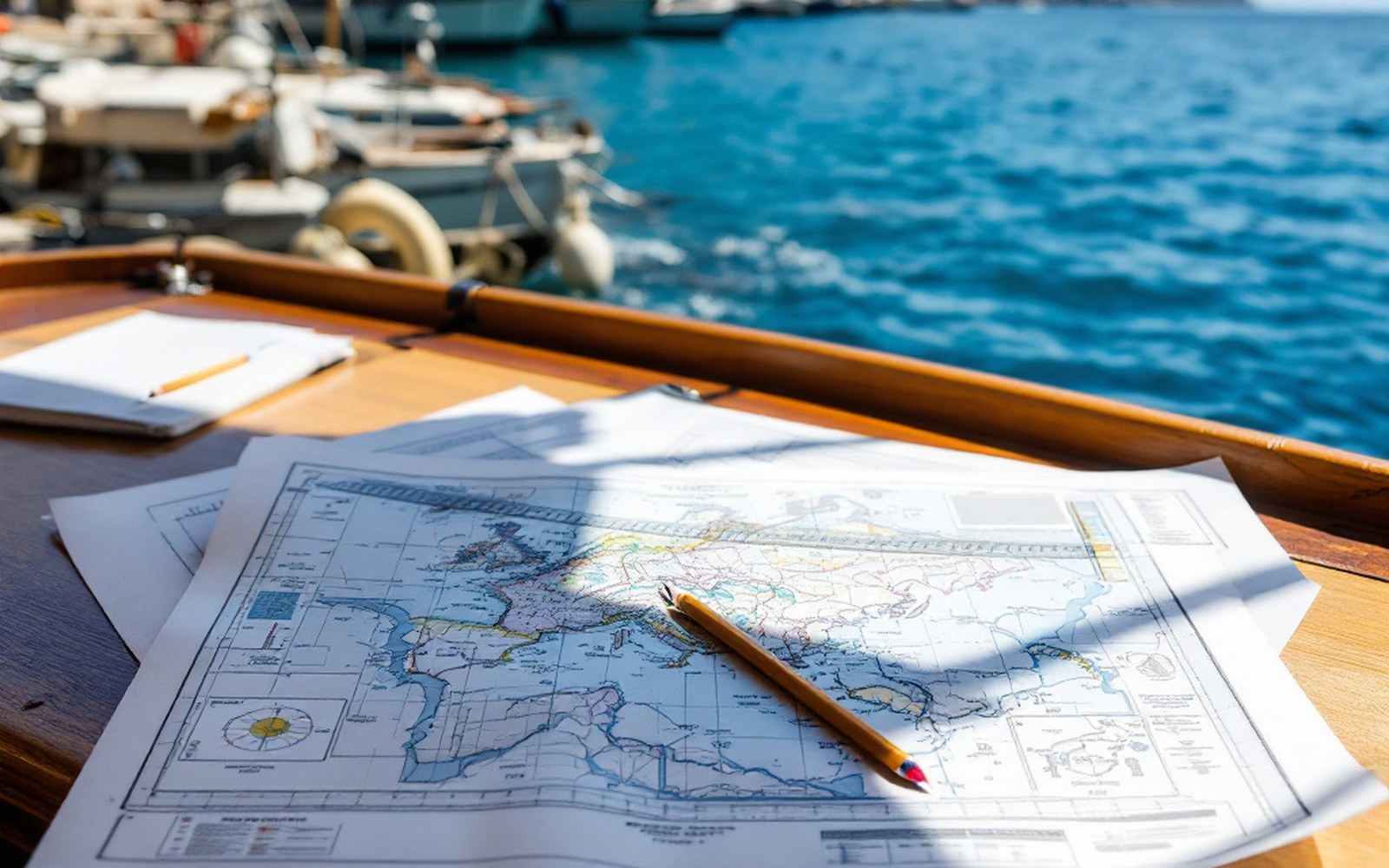
The standard week runs south from Göcek or east from Bodrum, and the shape of it is largely set before anyone steps aboard. Göcek and the twelve islands to the east of the bay, Fethiye ↗, then the run down toward Kaş — this is the corridor that most gulets work, and the reasons are practical. The bays are sheltered, they are deep enough to anchor, and a 24-metre timber hull needs that depth. The itinerary in the charter folder is optimistic by design; the week that actually happens is shorter.
Day one is rarely a full sailing day. Provisioning runs late, or the previous charter hands back later than noon, and by the time the passerelle — the boarding gangway that doubles as a stern gangway at anchor — is stowed and the stern-to mooring slipped, it is mid-afternoon. The crew is targeting an anchorage forty minutes away, not Kekova.
The meltemi reshapes everything that comes after. This is the summer northerly that builds through the afternoon across the Aegean; on the Turkish coast it arrives reliably by early afternoon, which is why a captain who is moving will move in the morning. By two o'clock the sea state makes for an unpleasant passage and a wasted fuel bill, so most boats anchor by then and stay anchored. That is not a failure of planning — it is the logic of the season.
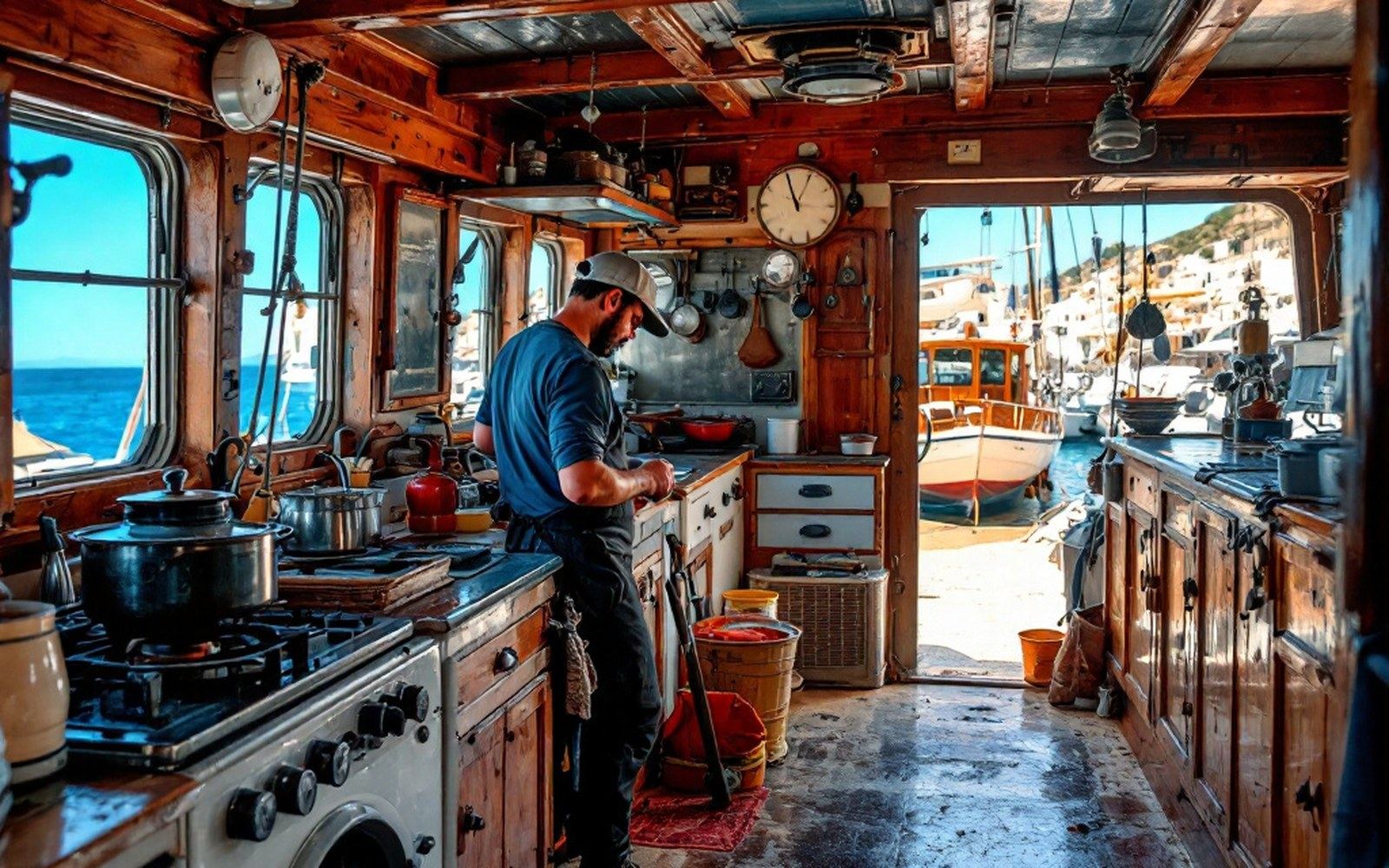
What fills the afternoon is not sailing. It is swimming, eating, sleeping. The cook produces lunch at anchor and dinner at anchor, and the deckhand handles whatever the captain cannot reach from the helm. The engine ran for three hours in the morning. The sails may or may not have been deployed; on many gulets they are decorative as often as functional, particularly in the lighter months of June and the heavier work of August.
What the engine is doing
A gulet is not a sailing boat that has an engine. It is a motor-sailer in which the balance tilts reliably toward motor. The hull is heavy — twenty tonnes is not unusual for a mid-sized example — and the rig is modest relative to that displacement. When the wind is forward of the beam, or absent, or building into the uncomfortable register above twenty knots, the engine runs. Diesel consumption across a full charter week can reach four hundred litres on a larger boat; on a week where the wind cooperates, that number falls, but it rarely disappears.
This is not a criticism. The passage from Fethiye down toward Kaş offers some of the most exposed water on the coast, and a heavy wooden hull in a following sea from the north can make excellent time under the meltemi without a sail raised. The engine provides the margin between the itinerary and the weather. Without it, the week would contract to two or three bays.
What the miles add up to
A week that departs Göcek and is asked to reach Kekova and return covers something in the region of 200 nautical miles in the round trip, depending on the route. That is a comfortable number for a capable crew. In practice many charters cover rather less — a bay near Ölüdeniz ↗, Kaş if the timing holds, the waters around Kekova over the stonework if the week stretches — and the passengers are rarely disappointed. The distances between anchorages on this coast are short enough that three hours of motoring places you somewhere genuinely unlike where you left. That, rather than the miles logged, is what the week is for.