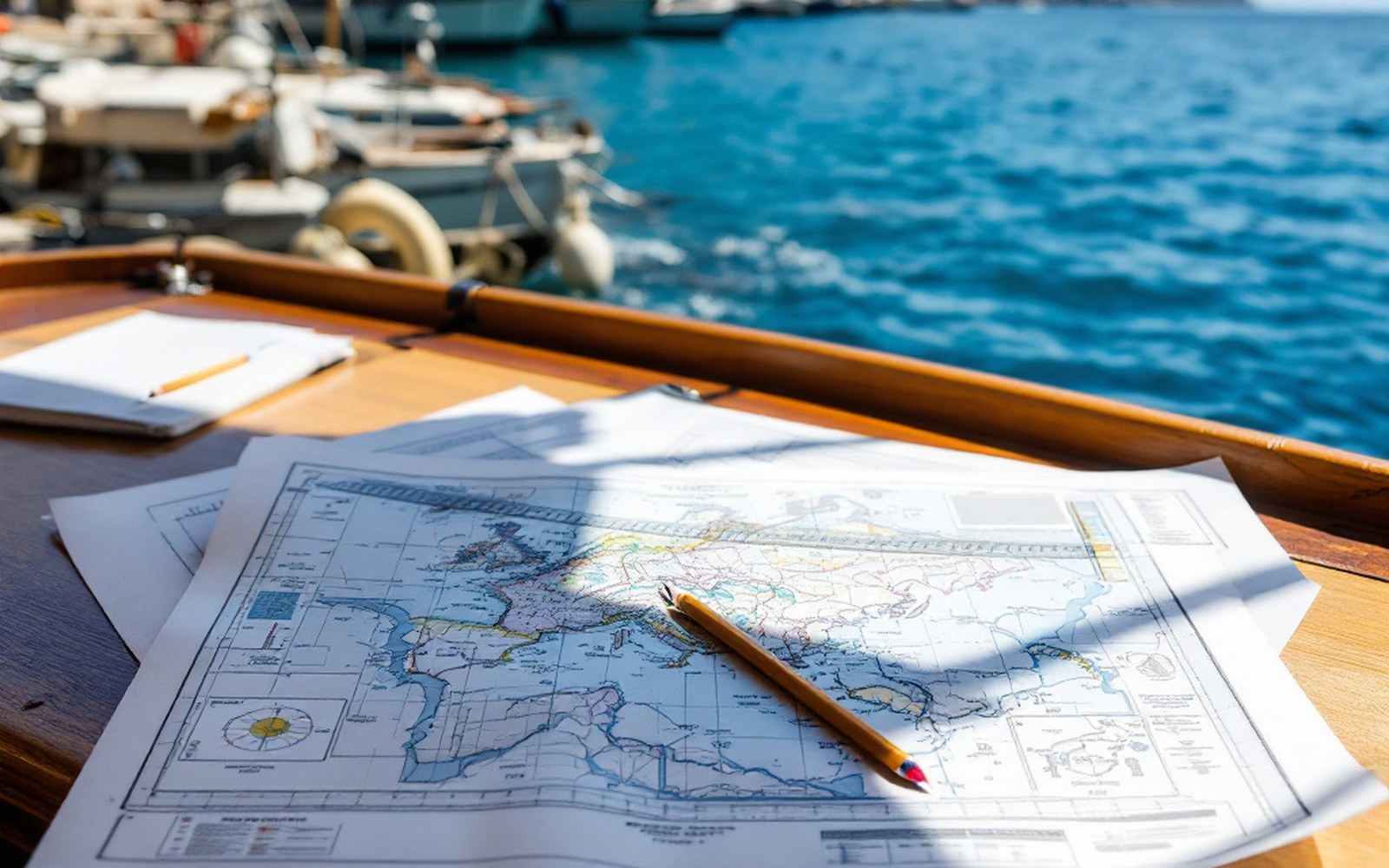
How a Blue Cruise is crewed
Three people run the boat. One drives, one cooks, and one does everything else — and the hierarchy is largely unchanged from the cargo trade that preceded the tourist season.
The permanent three
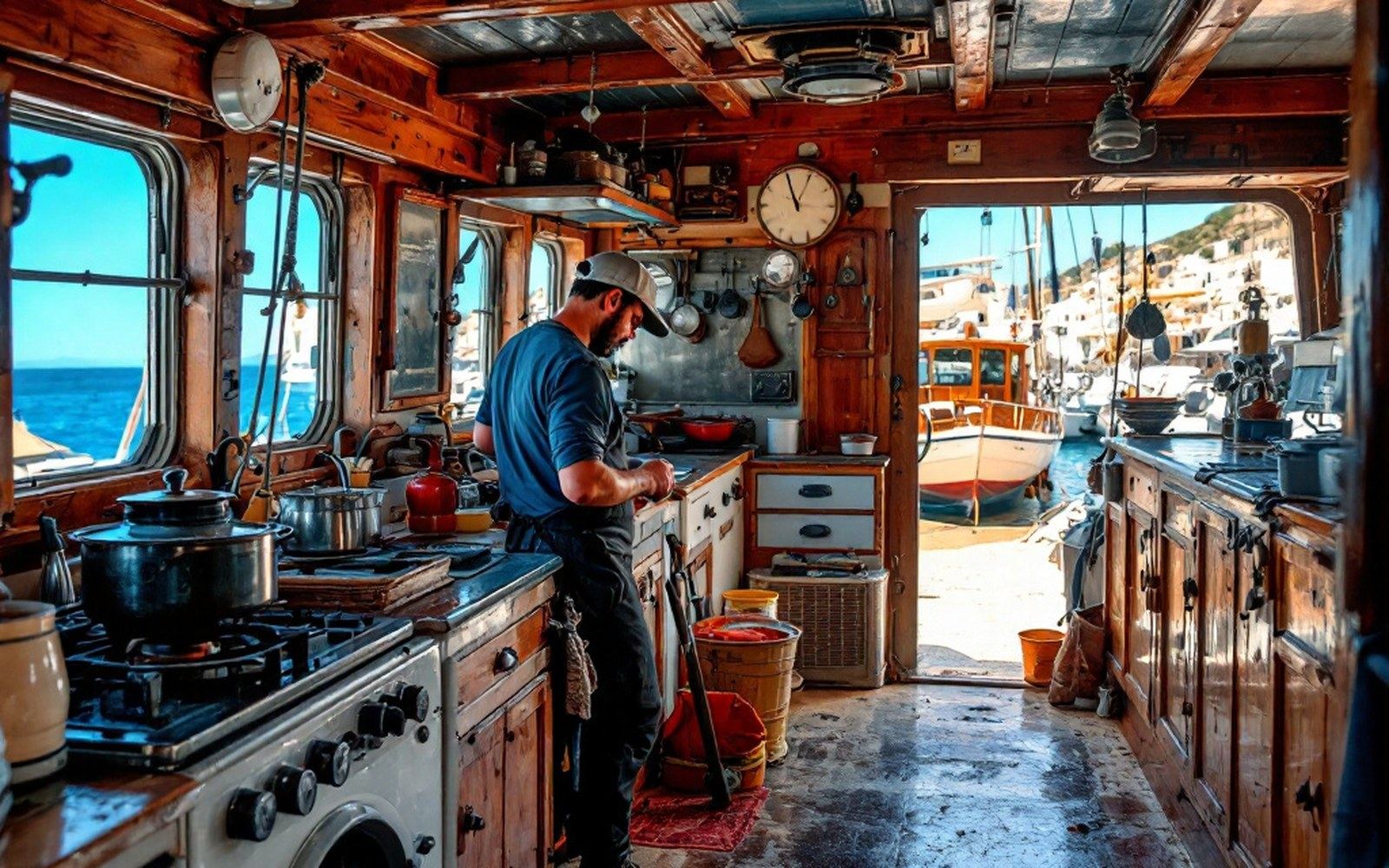
A gulet carrying charter guests operates on a crew of three: a captain, a cook, and a deckhand. On larger hulls, over around twenty-two metres, a second deckhand sometimes appears on the manifest; on smaller gulets, around fourteen to sixteen metres, the deckhand may be a teenager from a neighbouring village doing a first season. The number varies slightly; the structure does not.
The captain holds the authority and the paperwork. Turkish maritime law requires the skipper of a commercial passenger vessel to hold an appropriate certificate of competency issued by the Turkish Directorate General of Maritime Affairs, and on a wooden gulet of any size that typically means a coastal or offshore master's licence obtained through formal examination rather than accumulated sea-time alone. What is harder to certify, and what owners care about almost as much, is the captain's knowledge of the coast between Göcek and Kaş — where the depth comes up quickly off a particular headland, which anchorages are tenable in a southerly swell, when to leave because the meltemi will make an afternoon passage uncomfortable. That knowledge takes years, and it is the reason most good captains on this coast started as deckhands on it.
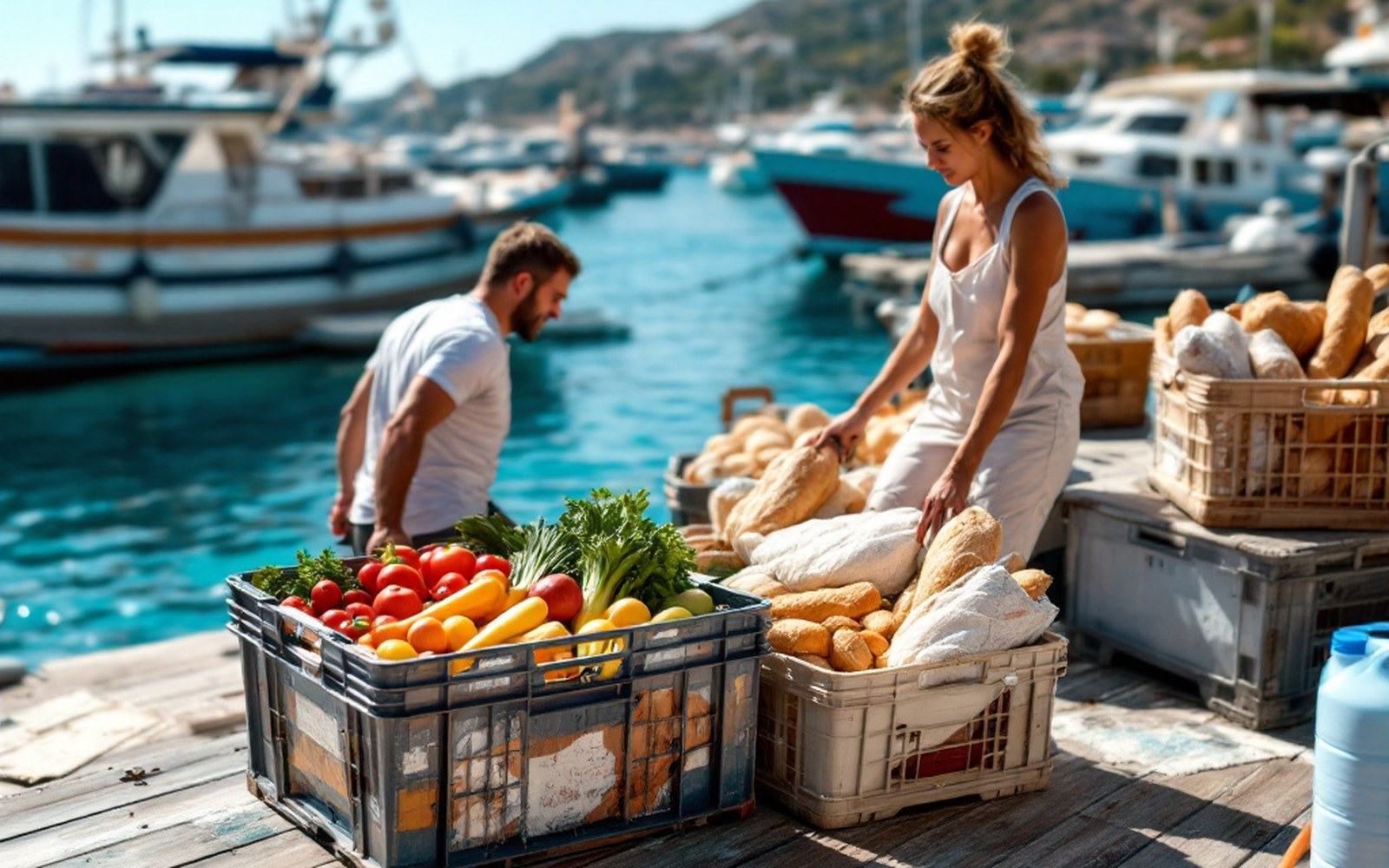
The cook is, in practice, the person most guests notice. Meals on a Blue Cruise — the term that covers this style of crewed wooden-boat cruising, popularised in Turkey from the mid-twentieth century largely through the writer Cevat Şakir Kabaağaçlı, who wrote as Halikarnas Balıkçısı — have a specific character: fish when the captain's cousin has caught it, mezze at anchor, fruit bought at the Fethiye ↗ or Kaş market on provisioning day. The cook manages the galley, the provisioning money, and the relationship between what guests asked for on Monday and what the market actually had. A good cook on a well-regarded boat is not easy to replace, and experienced ones are known by name across the yards at Bodrum.
The deckhand's work is the least visible to guests and the most continuous. Lines and fenders at every stern-to mooring — the Mediterranean practice of backing the stern to the quay while a bow anchor holds the bow off — require quick hands, especially in a crowded Kaş harbour in August. The passerelle, the narrow gangplank bridging stern to quay, goes out and comes back at every stop. Ropes are coiled, winches cleaned, the dinghy outboard is kept running, the anchor chain is hosed after every lift in Kekova's silty water, and the boat is generally maintained in a condition that guests assume is automatic. It is not. On a hot July afternoon at anchor near Simena while guests are swimming, the deckhand is usually in the engine room.
How the work divides in practice
The division is clear in its outlines and blurred at the edges. The captain makes navigational decisions and takes the helm in confined water — backing a twenty-metre hull stern-to in a town quay like Kaş while a northerly is getting up requires judgement that neither the deckhand nor the cook is expected to provide. The cook is responsible for everything between the waterline and the saloon ceiling that involves food or cleaning. The deckhand is responsible for the physical boat: hull, engine, deck, dinghy, anchor, fenders, lines.
In practice the boundaries shift with personality. A deckhand who is handy with an engine becomes the mechanical resource the captain relies on. A captain who enjoys cooking helps plate at mealtimes in the way that captains who do not enjoy it simply do not. A cook who grew up around boats can take a stern line in a moment of pressure without anyone asking. None of this is in any contract; it is in the character of three people who will live at close quarters for four or five months.
That proximity is structural. A gulet has separate crew quarters — typically a small forepeak cabin with berths for the deckhand and the cook, and a separate but not much larger space for the captain — but these are not private in any meaningful sense. The crew eats after the guests eat, from the same galley, often on the same aft deck. There is no break room. On a good boat with a good season, the arrangement functions; on a bad season with a difficult charter group, the compression becomes its own problem, and captains talk about certain weeks the way surgeons talk about certain operations.
What the crew does not decide
Routing is nominally the captain's prerogative, but on a charter boat the route is shaped by guest preference in ways that a cargo-vessel captain would find surprising. If the party wants to stay three nights at Göcek's twelve islands rather than pushing to Kos, the captain adjusts. If someone in the group is determined to reach Ölüdeniz ↗ by Wednesday, the captain makes the arithmetic work or explains why it does not. The cook adjusts provisioning accordingly.
What none of the crew decides is the commercial structure of the week. Fuel surcharges, mooring fees, the percentage retained by the charter agency — these flow through the owner, who may or may not be present. Most gulets are owned by individuals, sometimes families in coastal towns who have converted equity from a previous business into a wooden hull, and the owner's relationship with the captain is a separate negotiation entirely. A captain who runs a boat well, fills the season, and comes back with the hull undamaged can command terms. One who does not is replaced before the following April.
Tipping, and the season's arithmetic
Gratuity is not included in charter fees and not guaranteed by any arrangement. In practice, a satisfied group tips at the end of the week, and for crew on a Turkish gulet this is not a supplement — it is a meaningful part of the season's income. Charter wages on this coast, as of the early 2020s, varied widely by boat class and by captain seniority, but across the industry the base salary for a deckhand in a first or second season was modest enough that a summer of good tips could double the effective earning. The cook and captain receive proportionally more in base pay; the tip structure tends to mirror it.
The season runs from roughly late April to early October, with the core weeks in July and August. Crew are not typically employed outside it. The five-month cycle — fitting out in spring, hard work through summer, layup in autumn — defines the rhythm of working life for everyone on these boats, and it means that a crew which works well together must be reassembled each year. Captains with strong reputations often bring their deckhand back; cooks with their own followings sometimes bring themselves. The three-person structure looks simple from the aft deck. Running it well, season after season, is what a wooden boat actually costs in human attention as much as in materials.