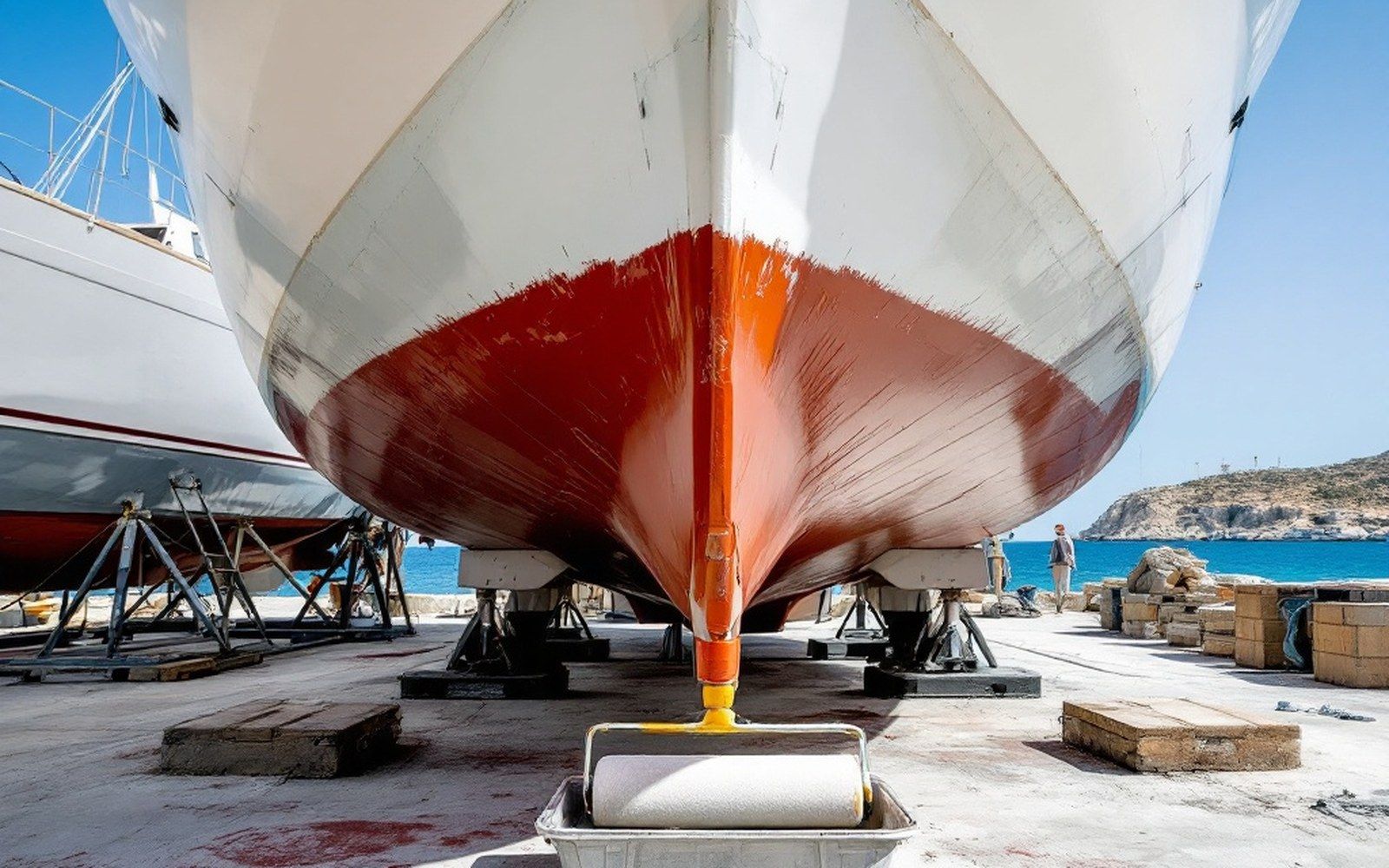
A Göcek pontoon against a town quay
The margin between a marina berth and a free wall can run to several thousand euros a season. What exactly fills that gap.
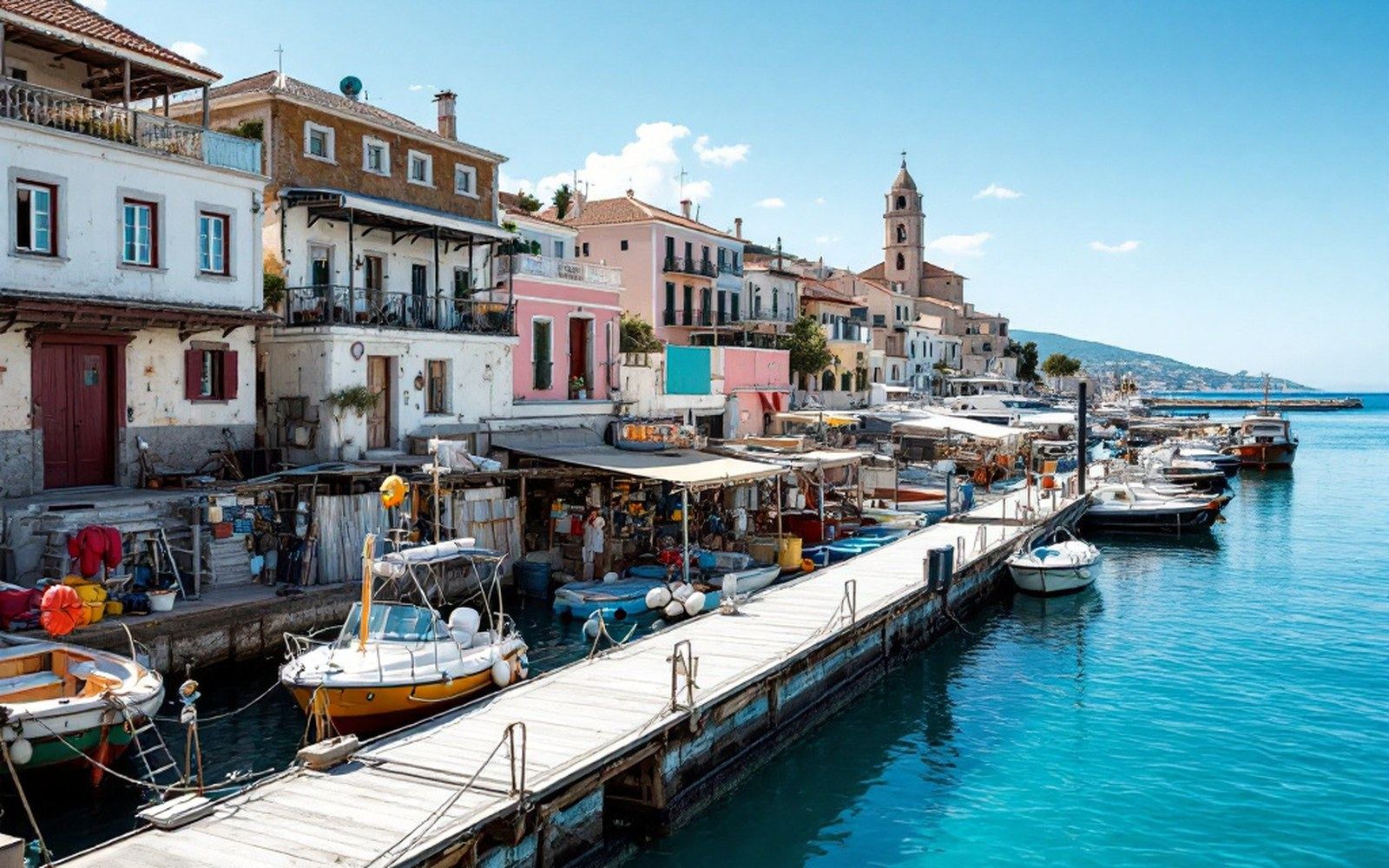
What the quay gives you for nothing
Göcek has two faces: the marina side, where floating pontoons carry power pedestals and metered water, and the town quay, where the fishing boats tie and the restaurants put out their signs at dusk. The quay is not technically free — the municipality charges a mooring fee, and the harbour authority may collect a dues stamp — but across a full season the arithmetic is dramatically different from anything Göcek Marina or the Skopea Marina complex charges per metre per night.
The town quay gives you a wall, a line through a ring, and access to the town on foot. It gives you proximity to the fruit market, the chandlery strip along the back streets, and the bakeries that open early enough to matter. What it does not give you is reliable shore power, a water connection with any pressure, pump-out for the holding tank, or a wifi signal worth mentioning. In summer, the quay fills quickly. The stern-to mooring arrangement — bow anchor out, stern line to the quay, passerelle bridging the gap — is standard on both sides of the harbour, and the manoeuvre itself is the same. The ground tackle is your problem either way.
Security at the quay is informal. There is usually someone watching, the way there is always someone watching in any Turkish town harbour, but there is no overnight staff, no CCTV posted in a kiosk, no gated pontoon finger. For a boat left unattended for several days while crew travel inland, this distinction carries weight.
What a marina berth buys
Göcek sits in a bay divided among several marina operations. Göcek Marina ↗, originally developed in the late 1980s as the coast began to absorb the growing Blue Cruise trade, has been expanded and upgraded more than once since. Skopea Marina lies further into the bay. Club Marina and D-Marin Göcek represent the higher end of the market in terms of facilities and, correspondingly, price.
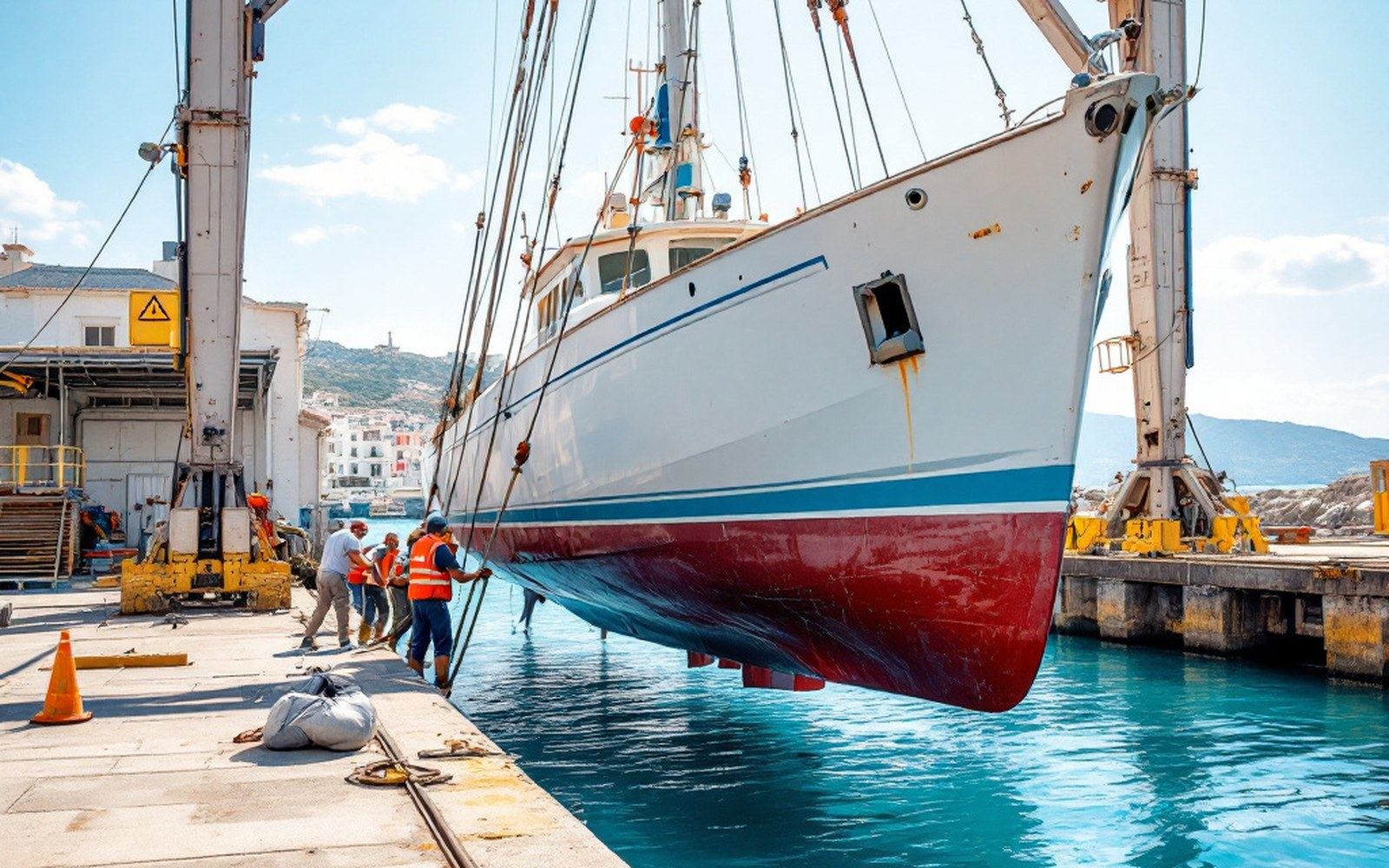
What a full-service berth buys is specific: a shore-power connection rated at the pedestal, metered water, a laundry, toilets and showers that are cleaned between boats, pump-out access, and wifi across the pontoons. There is a fuel dock with diesel and gasoline, usually at posted prices that are fractionally more convenient than trucked jerry cans. There are engineers and riggers within the marina grounds or contracted to call there — useful when the watermaker loses pressure on a Saturday morning. There is a travel lift if haul-out is needed. The whole facility is fenced and staffed around the clock.
For a gulet carrying paying guests, these things are not luxuries. A generator running overnight to supply air conditioning is expensive in fuel; shore power at reasonable rates eliminates that calculation for boats rigged to use it. Guests who expect to step from a passerelle onto a clean pontoon with their bags expect, implicitly, that the boat is in a place with those facilities behind it.
The gap in price between a marina berth and the town quay in Göcek has historically been substantial — not doubled, but multiplied several times over, especially for larger hulls. In seasons when the euro–lira rate was moving against Turkish operators, marinas priced in euros held their value while the quay fees, collected in lira, became even cheaper in relative terms. The relationship fluctuates, but the direction is consistent: a 20-metre gulet in a full-service Göcek berth during July or August costs a great deal more per night than the same boat against the town wall. Across a sixteen-week season, that differential compounds into a figure that serious owners track carefully, because it is one of the few genuinely discretionary line items in a boat's annual budget.
The season's arithmetic
The calculus changes depending on how the boat is used. A charter gulet working a full summer has different priorities from a privately owned boat whose owners come out for three or four weeks and leave the boat on the hard or on a swinging mooring in between.
For charter work, the marina berth is partly a cost and partly a marketing asset. Guests are collected and delivered at a pontoon, not a municipal wall; the photograph in the charter brief shows a clean walkway, power pedestals, the marina restaurant a short walk from the stern. The marina berth is therefore part of the product being sold, which means its cost is recoverable — in principle — through the charter rate. Whether it actually is recovered depends on occupancy, and the arithmetic behind that calculation is rarely as clean as a season's projection suggests.
These are not arguments for a marina over a quay — they are arguments for having the conversation with your insurer before the season rather than during it.
For a private owner, the calculation strips away the marketing element and leaves only the cost against the utility. If the boat is genuinely used — live-aboard weeks, frequent provisioning, overnight guests, equipment that needs power — the marina justifies itself on convenience alone, and the quay fee comparison becomes somewhat academic. The boat is either here and plugged in or it is at anchor in one of the twelve islands that make the Göcek bay its own cruising ground.
The more interesting case is the boat used moderately: a few weeks in summer, long passages planned but not always taken, the rest of the year on the hard or in a winter berth somewhere cheaper. For this owner, a full summer marina contract is a commitment that requires honest scrutiny. Marina berths by the month in Turkish waters are regulated under frameworks that cover minimum facility standards — standards that the Turkish Ministry of Culture and Tourism ↗ applies to classified marina licenses — but the rates themselves are set by the operator and vary considerably between facilities and between seasons. A monthly contract negotiated before the season opens will typically undercut the nightly rate applied in August, sometimes by a wide margin. Owners who pay nightly in August because they signed nothing in March are funding other people's discounts.
There is also the question of what the town quay charges for, beyond the symbolic. The municipal fee covers the right to be there; it does not cover insurance against the boat next to you arriving badly in the dark, or the wash from the 07:30 ferry cutting through the anchorage, or the unattended charter tender that drifts into your gelcoat at 02:00. These are not arguments for a marina over a quay — they are arguments for having the conversation with your insurer before the season rather than during it.
The quay, for all its roughness, has its partisans. Experienced Blue Cruise captains who know Göcek well often position themselves against the town wall when no guests are aboard, because the saving is real and the inconvenience is manageable for a working crew that does not need air conditioning or a laundry. For the same reason, boats in transit — picking up provisions, clearing customs, waiting for a weather window — treat the quay as what it is: a parking space, not a base. Whether a given boat needs a base, or only a parking space, is the question the season's arithmetic is really asking.