Antifouling, and how often
The interval between coats is set by the water, not the tin — and the penalty for getting it wrong is paid in fuel, not aesthetics.
What grows, and what it costs you
Fouling in the eastern Mediterranean is not what Atlantic sailors describe. The water is warmer and saltier, which accelerates biofilm formation in spring and slows it — relative to Atlantic harbours — through the height of summer when salinity peaks. What grows here is primarily weed and soft organisms in May and June, with barnacles following if the hull sits undisturbed in a marina for any length of time. A boat left stern-to on a town quay in Göcek through June, not moving, will be trailing weed by early July. The same boat on a mooring ball, moving three or four times a week, stays cleaner longer; water flowing across an ablative coating is part of how ablative coatings work.
The hydrodynamic cost is not cosmetic. Research published by the International Journal of Naval Architecture and Ocean Engineering has quantified the relationship between hull roughness from fouling and resistance: even a light slime layer — caliper-thin biofilm, invisible from a distance — raises frictional resistance measurably. For a gulet motoring at seven knots in flat water, moderate growth pushes fuel consumption up by fifteen to twenty percent before the skipper notices anything wrong. The engine feels fine; the fuel tank disagrees.
The interval the yards actually use
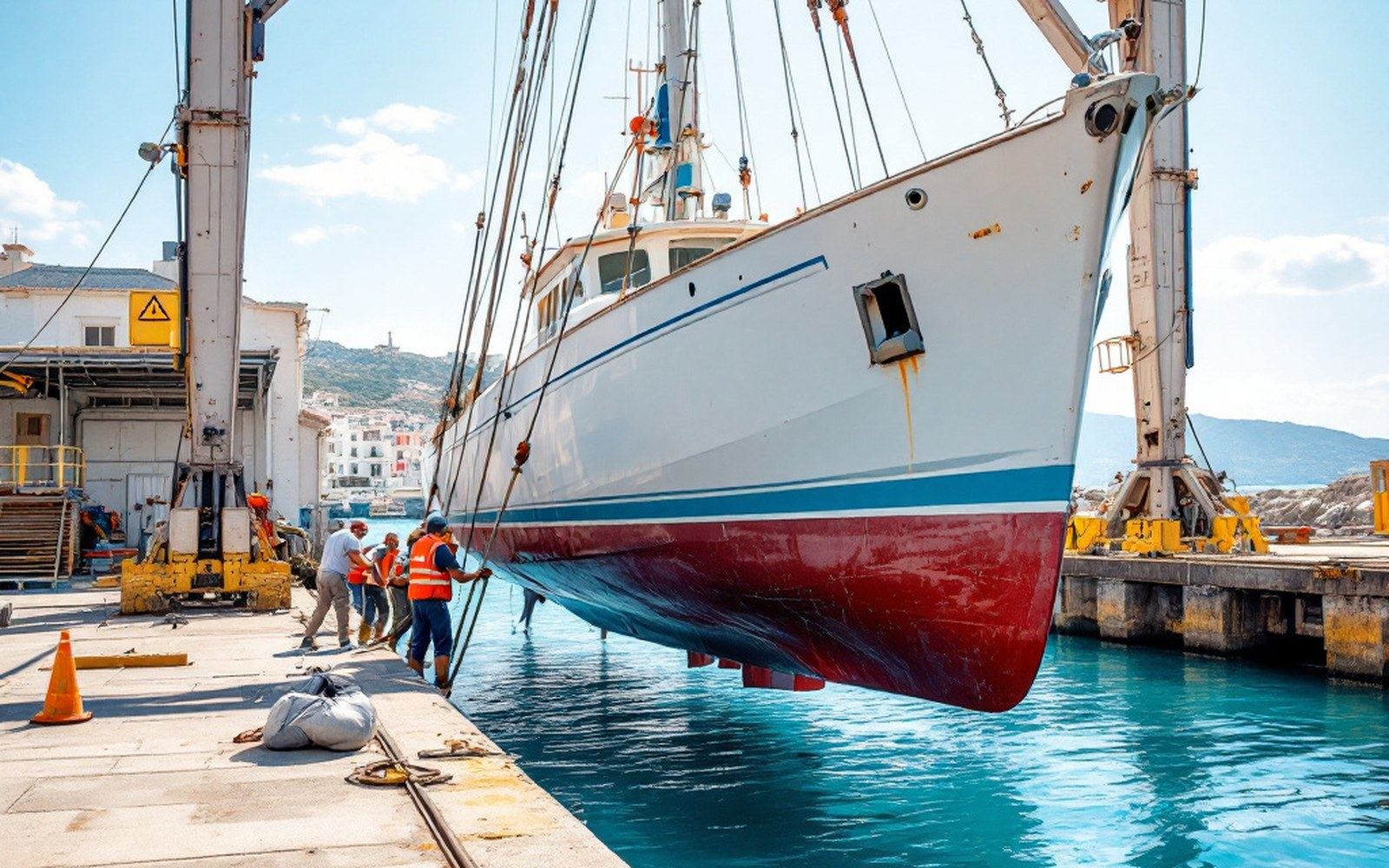
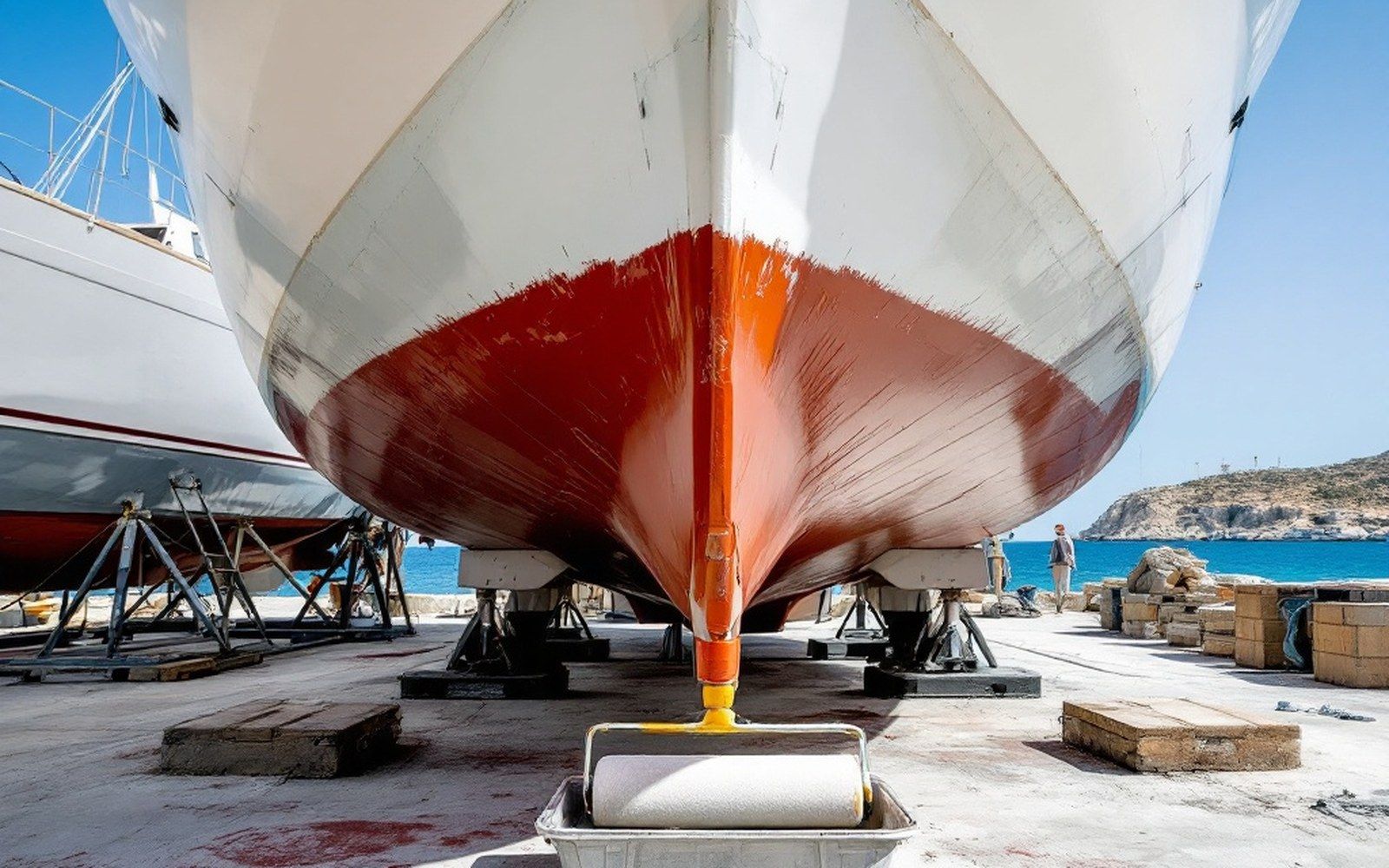
A gulet hauled at Ağanlar Boatyard ↗ or the other remaining yards around Bodrum for its winter layup will be pressure-washed within an hour of leaving the water, inspected for osmosis and mechanical damage, and antifouled before relaunch in April or May. That single annual application is the baseline, and for boats that cruise actively through the season — moving most days, rarely sitting more than a few nights in one place — it is often enough. The coating does its work, ablates steadily, and is largely spent by the time the boat comes out again the following autumn.
The interval breaks down in two circumstances. The first is extended time alongside in a marina. Marinas in Göcek, Fethiye ↗ and Kaş charge for the berth; they do not charge for the growth that accumulates when a boat barely moves. Six weeks on a pontoon in high season is enough to defeat most single-season coatings, and a diver hired to scrub the waterline becomes a recurring cost rather than an emergency one. Diver rates along the coast in recent seasons have run in the range of €40–70 per visit depending on boat length and location, though those figures shift year to year. The second circumstance is a boat kept in the water year-round. Some owners who winter afloat find they need an additional coat — or at minimum a diver and a scrub — before the spring cruising season, because the biologically active autumn and early winter period adds months to the fouling clock.
The paint itself matters, but less than timing. Copper-based antifoulings remain the standard in Turkish yards; the European Chemicals Agency has been reviewing biocidal active substances under the Biocidal Products Regulation, and restrictions that apply in EU waters are watched here, since Dodecanese crossings put Greek regulations into the picture. A boat that crosses to Kos or Rhodes is briefly under Greek jurisdiction, and the trend in EU ports has been toward harder restrictions on high-copper formulations. Most owners currently use what the yards stock, which is effective and available; the regulatory landscape is worth tracking over a five-year horizon.
The honest summary is that one coat per year works for an active cruising boat, costs in the range of €400–800 applied depending on hull size and yard rates as of recent seasons, and fails quietly and expensively when the boat stops moving. The paint does not fail. The usage pattern does.