Charter arithmetic, until it doesn't
The ownership case always sounds compelling until someone runs the numbers both ways.

The cost of keeping before you sail
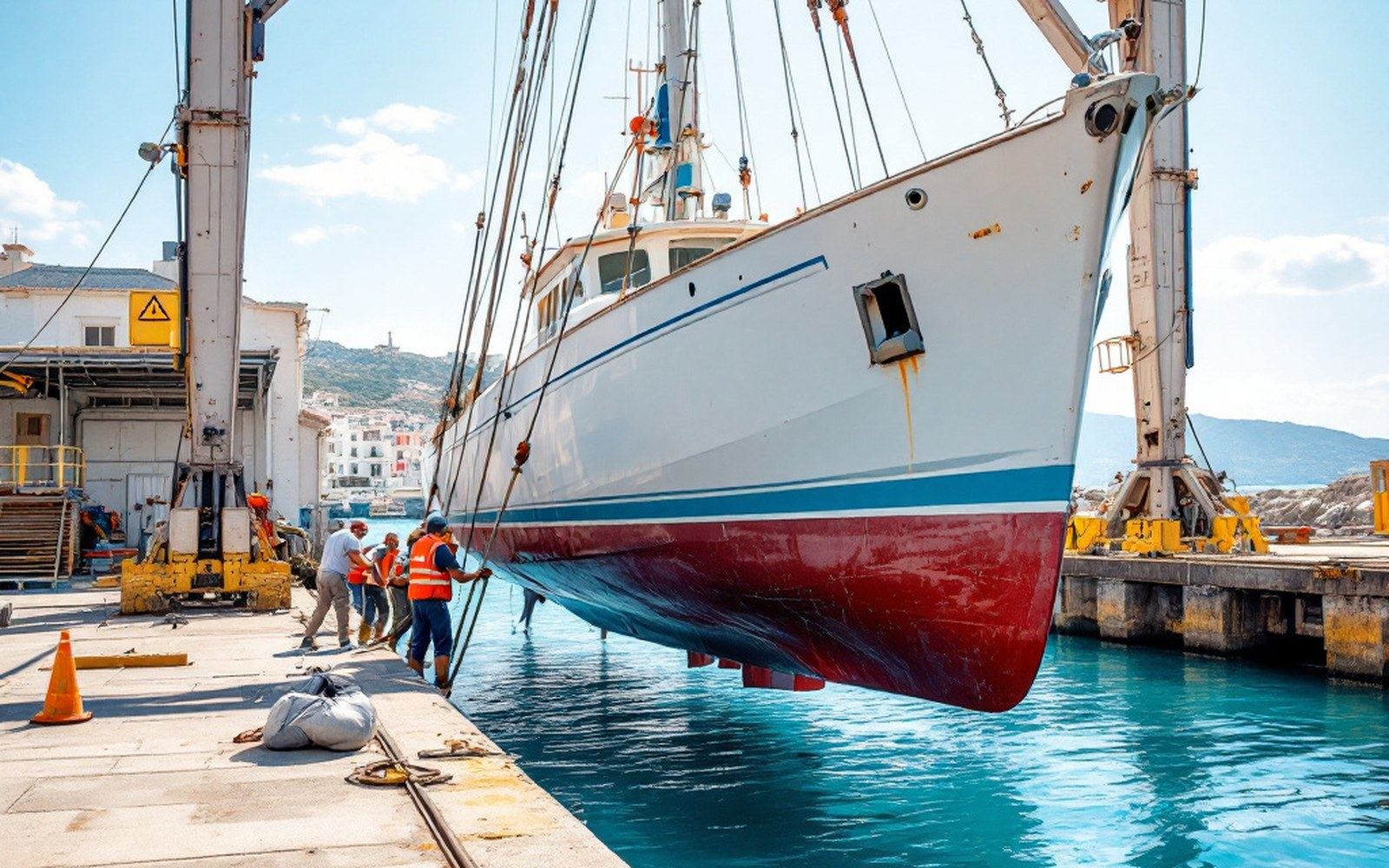
A 24-metre gulet — one of the classic wooden motor-sailers that line the hard at Bodrum in winter — earns nothing at the quay. It simply costs. Haul-out and pressure wash in autumn, blocks and cradle rental through the layup months, antifouling and a coat of topside paint in spring, insurance year-round, an annual survey when the underwriter requires one, crew wages whether the boat moves or not: these are the fixed overheads that arrive regardless of how many weeks the owner actually sails.
In the Bodrum yards, the total of those winter costs for a medium-sized gulet has typically run somewhere between €20,000 and €35,000 in recent seasons, depending on specification and condition — before the boat moves a centimetre. That figure does not include engine service, electrical work, rigging inspection or the replacement of any component that failed during the previous season. Wooden hull maintenance is structural, not cosmetic: the copper fastenings corrode, the caulking lifts, and the bill is rarely what the survey estimated.
Then there is the operating season. A gulet on the Turkish coast runs from approximately late April to early October — call it twenty-two to twenty-four weeks. Fuel, provisions, port fees, marina and mooring costs, and the cost of crew for every one of those weeks whether the owner is aboard or not: add another substantial sum. Professional captain, cook and deckhand at Turkish market rates represent a significant annual commitment even at a modest daily wage, and if the boat is flagged so as to require a Turkish licence-holder in command, there is no cheating that line.
What charter costs instead
A privately chartered gulet, hired for a week in July on the Göcek-to-Kaş coast, was costing somewhere in the range of €8,000 to €18,000 in recent seasons depending on size, fit-out and whether the charter is crewed or bareboat. That is a wide band, and the right number within it matters — but the structure of the comparison matters more. When you charter, you pay for the weeks you use. When you own, you pay for all fifty-two of them.
The arithmetic of ownership begins to work only when the weeks-per-year figure climbs high enough to justify the fixed base. Most buyers imagine they will use the boat for eight, ten, perhaps twelve weeks a year. The reality, documented by every yacht broker who has handled a secondhand sale with honest log records, is that private owners average something closer to three to five weeks. The gap between intention and use is not a failure of character; it is what happens when a working life, family obligations and the sheer logistics of a boat on the Turkish coast collide with the summer calendar.
At three weeks of actual use per year, a €400,000 gulet carrying €30,000 in fixed annual costs — before depreciation, before financing, before crew — is costing its owner somewhere north of €10,000 per week simply to exist, and that is before a litre of fuel is burned. Charter, at any reasonable price point for a comparable vessel, is strikingly cheaper. The meltemi does not care who owns the boat; the cost does.
Where the crossover actually sits
The standard industry claim is that chartering beats ownership until you use the boat for more than eight weeks a year. The honest version is more nuanced, and further out than that. Eight weeks of charter at €12,000 per week is €96,000 — and that sounds like a lot until set against the full annual cost of ownership: fixed yard costs, crew wages, insurance, maintenance reserve, depreciation on the hull and machinery, and the opportunity cost of the capital tied up in the asset.
There is some published analysis of this specific comparison across Mediterranean charter and ownership models, and its conclusion — that the crossover point for unchartered private ownership versus ad hoc annual chartering in the Mediterranean sits closer to twelve to sixteen weeks of actual use per year for larger motor-sailers — aligns with what experienced brokers say privately, as opposed to what they say to a client considering a purchase.
That figure does not include engine service, electrical work, rigging inspection or the replacement of any component that failed during the previous season.
There is one scenario where ownership arithmetic shifts: when the boat charters when the owner is not aboard. A well-run commercial charter programme on a boat that earns eight to twelve weeks of paid charter per year can meaningfully reduce or eliminate the fixed-cost burden. But this is not a free lunch. Charter management agreements ↗ typically claim a substantial management fee, restrict when the owner can sail, and impose a wear-and-maintenance regime that is harder on the boat than private use. The hull that charters hard needs antifouling attention sooner, the interior cushions wear faster, and the engine hours accumulate in a way that changes the service schedule.
What the numbers actually tell you
The emotional case for ownership is real and should not be dismissed. A gulet bought and kept at Ağanlar or one of the surviving yards at Bodrum is a specific thing — a particular hull, particular timber, a boat you know. The charter case is also real: flexibility, no fixed commitment, no crew to manage off-season, no survey due in March.
What the arithmetic resists is the ownership case made on cost grounds ↗. The owner who says chartering is throwing money away is usually counting only the charter fee and not the full ownership stack — depreciation, opportunity cost of capital, maintenance reserve and the crew wages that run regardless. When everything is counted, the crossover is not at eight weeks. It is further out than that, and most private owners do not get there.