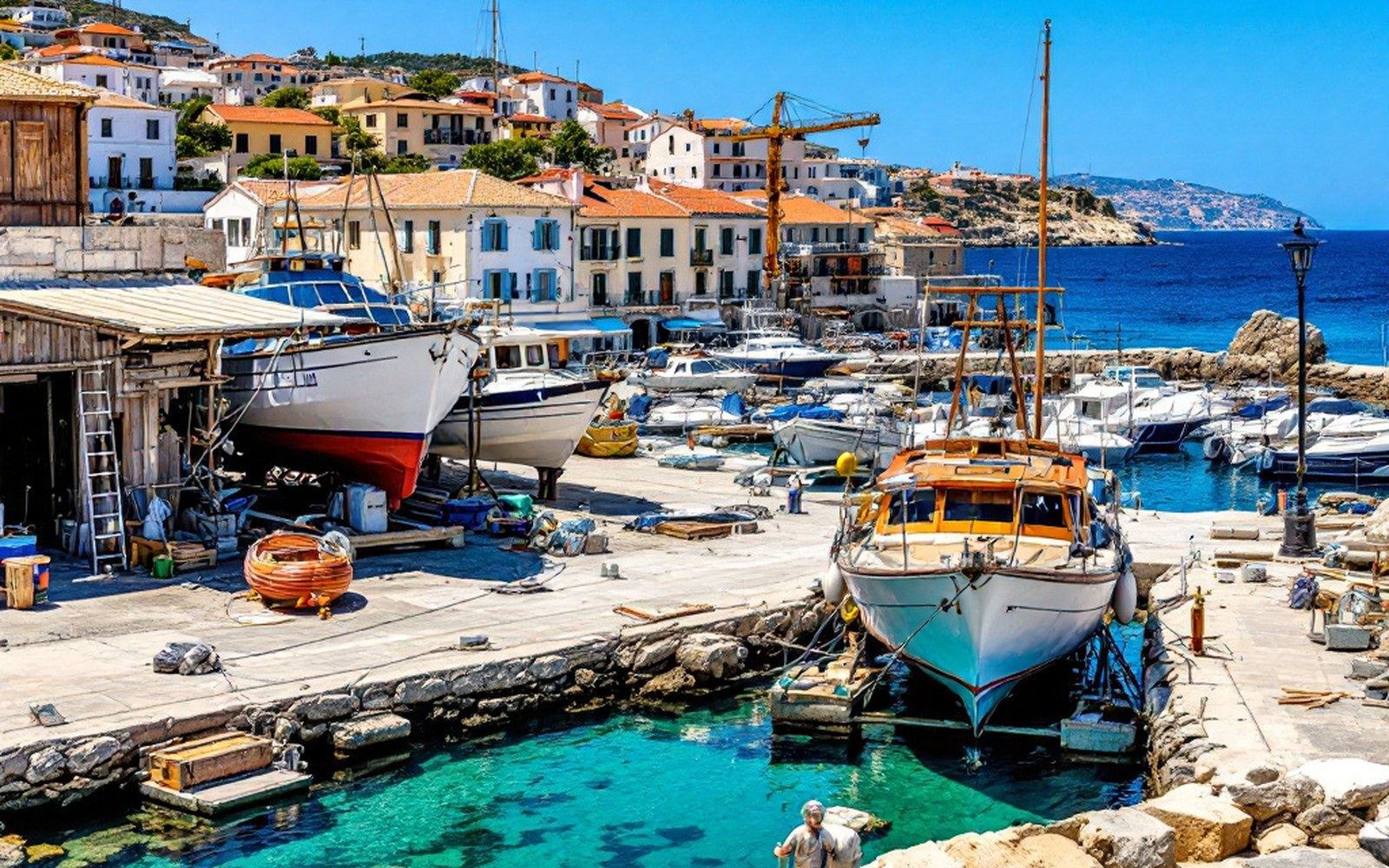
Frames standing on the hard
A wooden hull on blocked keel in a Bodrum ↗ yard is not a romantic image until you know what it takes to keep it there.
What a gulet is, before it becomes a cliché
The gulet (pronounced roughly goo-let, though yards vary) is a Turkish wooden motor-sailer, beamy and broad-sterned, evolved from the sponge-fishing boats of the Bodrum peninsula into the vessel that now defines the Blue Cruise — the gulet week along this coast. The type is not standardised in the way a production fibreglass boat is: no mould, no catalogue model, no single designer. Hull forms are lifted off previous builds, adjusted by eye, and argued over between owner and yard. A 24-metre gulet is roughly the mid-range of a working fleet that runs from about 18 metres up to 40, and it carries a rig — typically twin raked masts with a schooner arrangement — that is more decorative than propulsive. Planking without a drawing describes how that hull gets to standing; what follows is about what happens when it stops sailing.
The construction is iroko or larch over oak frames, fastened with copper or silicon-bronze, the whole thing built to absorb moisture and movement rather than resist it. That is a design philosophy, not a flaw, but it has consequences. Wood breathes. It works. Left unsupported, a hull of this size and weight will find its own distorted equilibrium. This is why the blocking matters almost as much as the building.
Why the hard is where the arithmetic lives
When a gulet comes out of the water at the end of the season — late October to November, typically — it comes out by travel lift: a wheeled gantry that straddles the hull and hoists it in slings before setting it down on timber blocks and steel stands. The positioning of those blocks is not casual. On a wooden hull, pressure in the wrong place over four or five months of Mediterranean winter will set a plank, shift a frame, or open a seam that was sound when the boat was launched. The yards that still do this work understand where the load should land; the ones that do not are cheaper for a reason.
The tarpaulin over the hull through winter serves two purposes simultaneously. It keeps rain off a deck that, once opened for maintenance, is an invitation to water ingress; and it keeps ultraviolet off brightwork and topsides that would otherwise need entirely replacing, not simply re-varnishing, by spring. At Ağanlar Boatyard ↗ in Bodrum — one of the yards that has remained a working operation as the town around it turned to restaurants and charter agencies — this winter storage is part of the standard package. What varies is how much of the maintenance work a boat owner specifies alongside it.
That is where the real negotiation happens. A gulet on the hard for four months can emerge in April requiring only antifouling and a polish, or it can emerge having had frames sistered, planks replaced, shaft and stern gland overhauled, and every piece of deck hardware rebedded. The tarpaulin looks the same either way from the road.
The thing the road does not explain
The strip of hard ground between the road and the water in Bodrum's remaining yards — fewer now than twenty years ago, as real estate pressure has converted working waterfront into marina facilities and restaurants — holds boats in a specific economic condition. They are not for sale, not in charter service, and not quite idle. They are in the phase of ownership where money is spent that will never be recovered in hire income or resale value: spent simply to keep the thing afloat and sound another year.
The annual cost of doing nothing badly runs into figures that surprise people who have not owned a wooden boat before. Storage, cover, blocking, insurance through layup, and a competent inspection before relaunch are not optional extras. They are what the hull costs in the months when nobody is on it. The frames standing on the hard are not resting. They are working, and so is the owner's bank account.