The timber, and what holds it together
A gulet hull looks like craftsmanship. Under the paint it is also a timetable.
What the wood is, and what it does
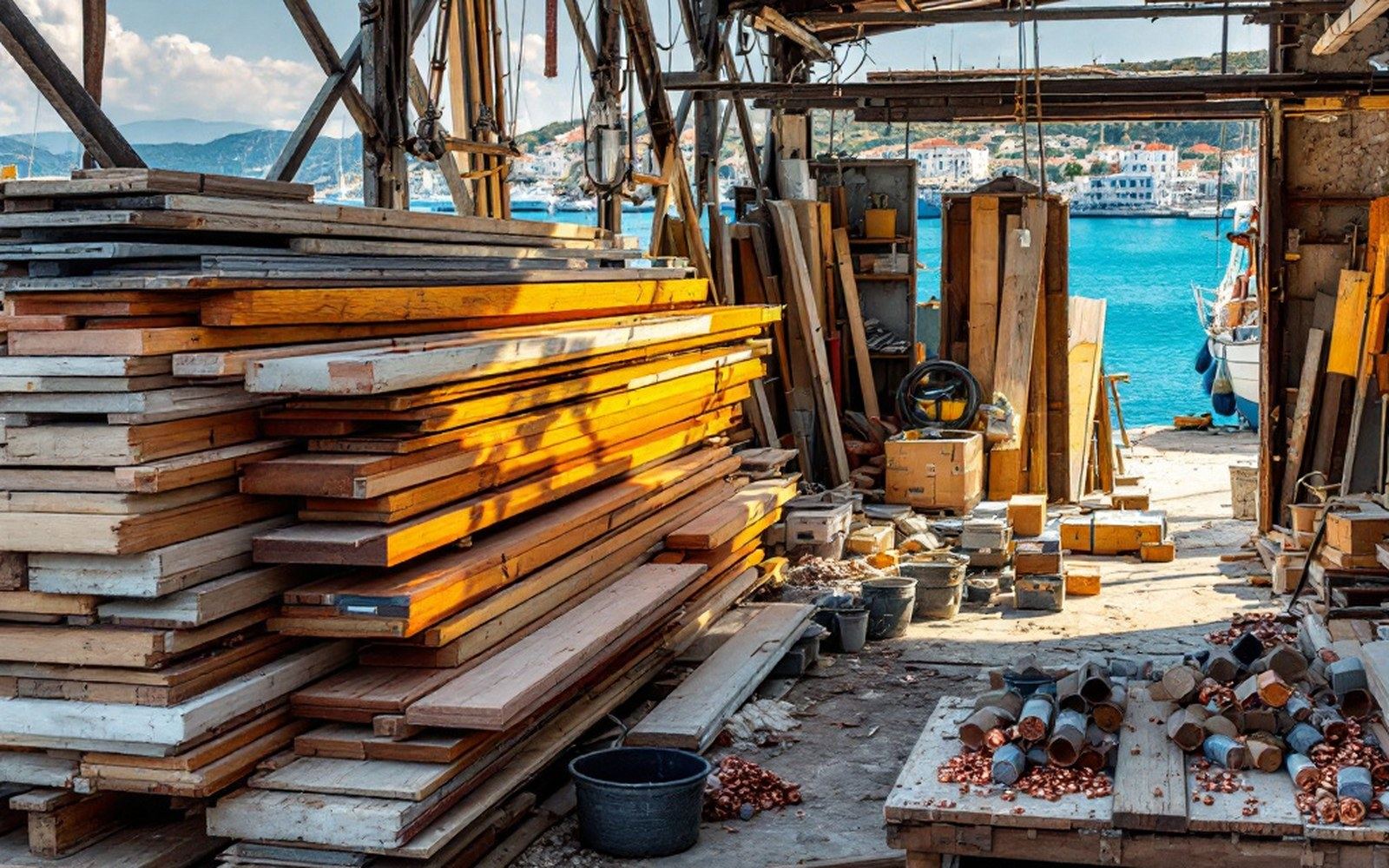
The hull planking on most modern gulets is iroko, a West African hardwood that arrived in the Bodrum yards as mahogany prices climbed and availability tightened through the 1980s and 1990s. Iroko ↗ works well with hand tools, takes fastenings without splitting, and resists rot tolerably — tolerably being the operative word, because no timber below the waterline is inert. The frames beneath it are typically larch or a local Turkish pine, denser than the planking it supports, chosen for its strength-to-weight ratio and its availability in lengths that suit a twelve-to-twenty-four-metre keel line.
What holds the planks to the frames is copper: copper nails driven and burred over, occasionally bronze screws where the load demands it. Copper is the right answer in salt water because it neither corrodes in the galvanic sense nor poisons the wood around it the way ferrous fastenings eventually do. A steel nail in a wet frame leaves a rust stain first and a crumbling pocket second; copper, done properly, outlasts the surrounding timber. The yards at Bodrum — Ağanlar ↗ among them — still shape and fasten by methods that have not changed in their essentials since the Ottoman period, even when the species roster has shifted.
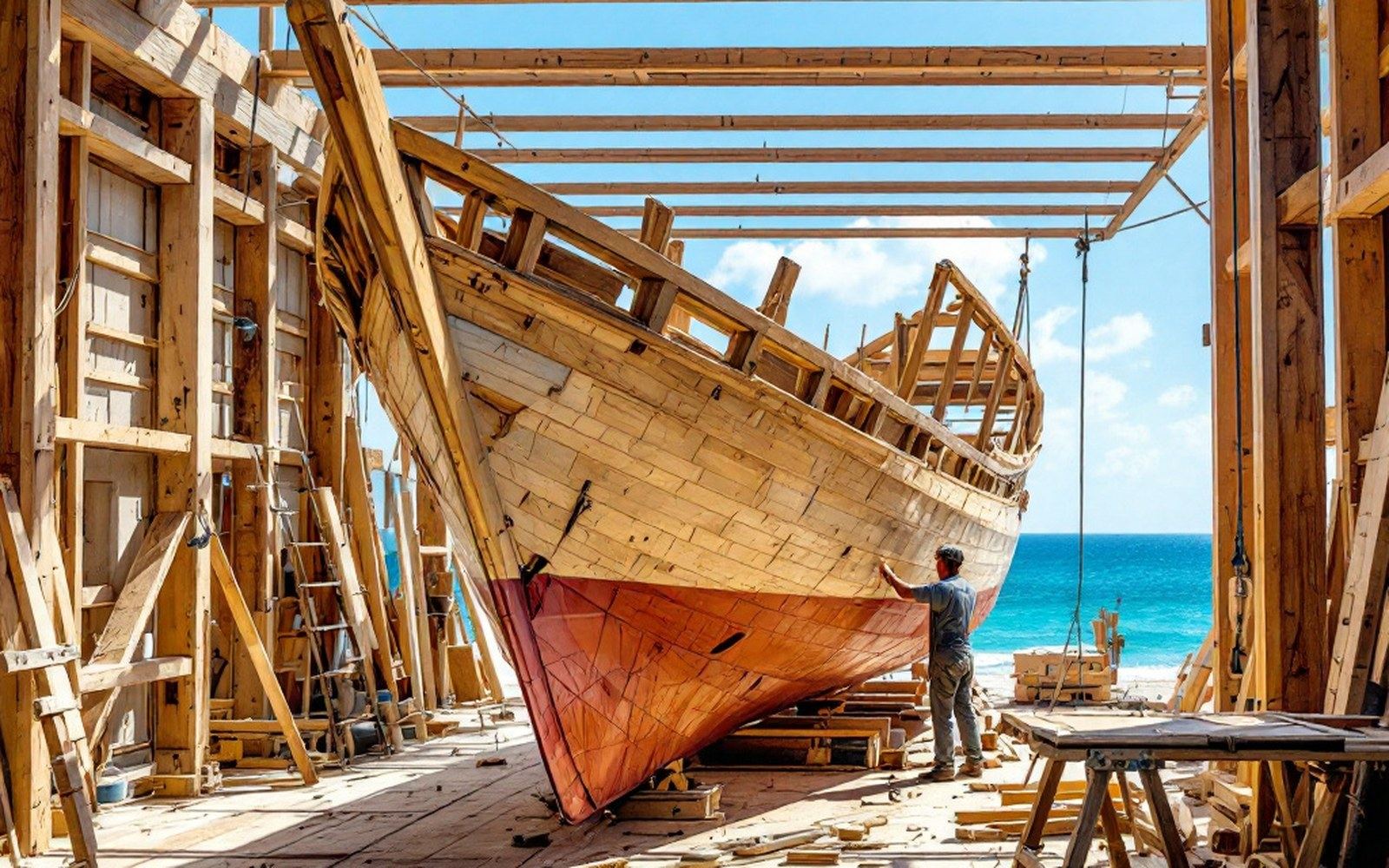
The seams between planks are caulked with cotton and paid over with a flexible compound. This is not a weakness in the system; it is the system. A wooden hull breathes — it swells when wet, tightens its own seams, and shrinks again when hauled and dried. The caulking accommodates that movement. What the maintenance schedule is tracking, season by season, is whether any plank has begun to move independently of the rest: a soft spot underfoot on deck, a weeping seam at the waterline, a frame that flexes when it should not.
The practical consequence is that a lift-out is not merely antifouling and a pressure wash. It is the annual opportunity to read the hull properly — to probe fastenings, sound planking, and catch the rot that begins as a discolouration and ends as a structural conversation you do not want to be having in the water. Timber is not a maintenance problem. It is a maintenance schedule, and the schedule is the price of the material.